
Kansas City University College of Osteopathic Medicine - KCU-COM
Kansas City, Missouri
Main Campus
Joplin, Missouri
Additional Locations
General Information
At Kansas City University College of Osteopathic Medicine (KCU-COM), we educate physicians for the full responsibility of modern medical practice.
Founded in 1916, KCU-COM is one of the nation’s longest-standing colleges of osteopathic medicine and one of the few institutions with the experience, scale, and vision to help define what medical education must become.
Students at KCU-COM are trained to think critically and systemically; understand the biological, behavioral, and social drivers of health; communicate with clarity, empathy, and professionalism; and adapt to evolving models of care. This shared foundation prepares graduates to lead in complex, interdisciplinary health environments.
KCU-COM educates future physicians who unite scientific rigor, clinical excellence, and a deep commitment to patient-centered care. With campuses in Kansas City and Joplin, Missouri, the College offers distinct learning environments unified by a single academic standard and educational philosophy. Faculty are practicing clinicians, educators, and scholars who view teaching as a professional responsibility. Students are challenged early and often to develop clinical judgment, resilience, and professional maturity for modern medical practice.
Additional Locations
Additional Locations offer the same programs as the main campus. Use the main campus' application to apply to additional locations.
Kansas City University College of Osteopathic Medicine - Joplin Campus - KCU-COM Joplin
Affiliation
Address
Campus Setting
Website https://www.kansascity.edu/
Phone
Mission Statement
Closest City Kansas City, MO – Urban setting; Joplin, MO – Rural setting
Campus Setting
UrbanFacilities
Kansas City University’s learning environments are designed around one priority: preparing students to think, act, and perform as physicians.
Across both campuses, students learn in settings that emphasize clinical relevance, repetition, and increasing responsibility. Academic, clinical, and student spaces are intentionally integrated to support focused study, hands-on practice, collaboration, and personal well-being, mirroring the pace and expectations of modern medical training.
Clinical Skills, Simulation, and Repetition
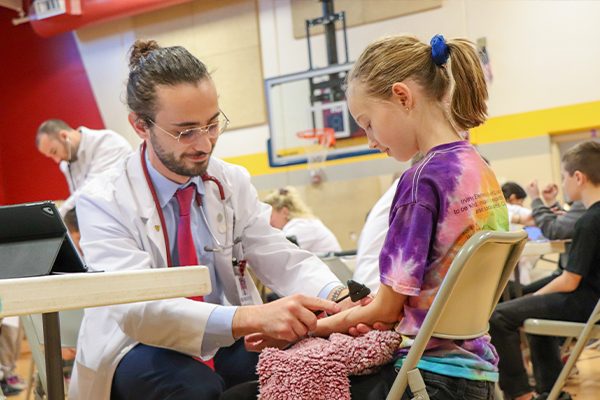
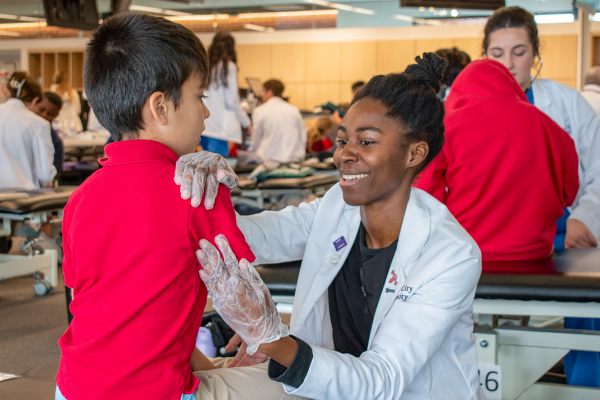
Students develop confidence and clinical judgment through structured simulation, standardized patient encounters, anatomy laboratories, and supervised clinical skills training. These environments allow students to practice decision-making, communication, and procedural skills early and often, building readiness before entering clinical rotations.
Kansas City Campus: Exposure and Academic Intensity
The Kansas City campus offers a dense academic and clinical learning environment that supports large-scale instruction, small-group collaboration, independent study, and comprehensive student support. Purpose-built lecture halls, learning studios, medical library, and centralized academic resources enable students to move efficiently between study, skills development, and support services, supporting sustained focus and performance.
Joplin Campus: Immersive, Hands-On Clinical Training
Opened in 2017, the Joplin campus was designed to emphasize active, hands-on clinical education. Smaller cohorts, advanced simulation and standardized patient laboratories, modern anatomy facilities, flexible learning spaces, and the Dawson Heritage Foundation Library support immersive training and close faculty engagement within a regional health care setting.
A Deliberate Training Ecosystem
Together, KCU-COM’s campuses provide complementary learning environments that expose students to diverse patient populations, care settings, and instructional models. This integrated approach supports adaptability, clinical confidence, and readiness for residency training and modern medical practice.
Student Residence Options
Student Support & Professional Development
KCU provides a comprehensive network of academic, professional, and personal support designed to sustain high performance throughout medical training. Students have access to tutoring, learning specialists, career advising, and counseling services that strengthen both academic progress and professional development.
Student organizations offer opportunities to build professional networks, participate in national conferences, engage in service, and gain additional clinical exposure.
A full overview of student support services is available at:
https://www.kansascity.edu/student-experience/student-services
THRIVE Program
KCU’s THRIVE Program strengthens resilience, professional growth, and personal well-being throughout medical training. Through structured programming, coaching, and peer connection, students develop the mindset and skills required to sustain performance in demanding clinical environments.
THRIVE integrates evidence-based approaches to resilience, cognitive flexibility, and social support, helping future health professionals navigate complexity, maintain perspective, and lead with steadiness throughout their careers.
COM Accreditation Status KCU-College of Osteopathic Medicine is accredited by the Commission on Osteopathic College Accreditation (COCA) and by the Higher Learning Commission of the North Central Association of Colleges and Schools.
University Affiliation(s) Kansas City University – Kansas City Campus & Joplin Campus
-
2024-2025
Academic Year Enrollment
Total Medical School Enrollment
Kansas City-1,104 Joplin-642
Total Male
Kansas City-539 Joplin-317
Total Female
Kansas City-564 Joplin-325
Total Other
Kansas City-1 Joplin-0
First-Year Matriculants
Kansas City-424 Joplin-TBA
First-Year Male Matriculants
Kansas City-200 Joplin-TBA
First-Year Female Matriculants
Kansas City-224 Joplin-TBA
First-Year Other Matriculants
Kansas City-0 Joplin-TBA
Matriculants In-State
60
Matriculants Out-of-State
364
Self-Reported Race/Ethnicity
American Indian/Alaska Native
0.5%
Asian
34.0%
Black/African American
2.6%
Hispanic/Latino
6.1%
Native Hawaiian/Pacific Islander
0.5%
White
42.2%
Multiple Races
4.5%
Undisclosed
3.8%
Majors of First-Year Matriculants
Science Majors
87.0%
Non-Science Majors
13.0%
Graduate Degrees
10.4%

Overview
Private Institution
Non-Profit
Kansas City University – Kansas City Campus & Joplin Campus
Institutional Affiliation
1916
Year Founded
Urban
Campus Setting
Campus Contact
Kansas City University College of Osteopathic Medicine - KCU-COM
Address
(800) 234-4847
Phone
Website
Admissions Office
Curricular Offerings
From the first days of training, KCU-COM emphasizes clinical relevance and patient-centered care. The curriculum integrates foundational biomedical sciences with early and progressively advanced clinical experiences, allowing students to connect scientific knowledge directly to patient care.
Students develop diagnostic confidence, clinical reasoning, and professional accountability through structured simulation, standardized patient encounters, and supervised clinical experiences. These experiences are intentionally sequenced to increase responsibility over time, preparing graduates to enter residency with the judgment, communication skills, and adaptability required for modern medical practice and lifelong learning.
Clerkship/Clinical Rotations
KCU maintains longstanding partnerships with respected physicians, hospitals, and health systems across the country to provide high-quality clinical training.
Students complete third-year clerkships at designated Core Sites, established educational partnerships between KCU and affiliated hospitals or health systems within a defined geographic region. During the second year, students participate in a Core Site Match process that determines their third-year clinical training location.
Fourth-year students gain greater flexibility in scheduling rotations and pursue clinical experiences aligned with their developing specialty interests as they prepare for residency.
Preparatory/Postbaccalaureate Programs Offered
MS in Biomedical Sciences (Kansas City Campus)
Kansas City University offers a Master of Science in Biomedical Sciences designed to strengthen advanced scientific preparation for students pursuing careers in medicine and the health sciences. The program is available in a one-year accelerated track and a two-year research track, allowing students to deepen their academic foundation while gaining experience in biomedical inquiry.
Dual Degrees/Concurrent Programs Offered
DO/MA Dual Degree DO/MA in Bioethics
DO/MBA
Dual Degree DO/MBA in Health Care Leadership
DO/MPH
Dual Degree DO/MA in Public Health
Premedical Coursework
Courses below are shown as either Recommended or Required and, when applicable, include the number of semester hours needed.
Anatomy
Recommended With Lab4 semester hours
Biochemistry
Required3 semester hours
Biology/Zoology
Required3 semester hours
Cell/Molecular Biology
Recommended With Lab4 semester hours
Chemistry (Inorganic)
Required With Lab8 semester hours
Chemistry (Organic)
Required With Lab8 semester hours
Genetics
Recommended3 semester hours
Immunology
Recommended3 semester hours
Microbiology
Recommended3 semester hours
Physics
Required With Lab8 semester hours
Physiology
Recommended With Lab4 semester hours
Additional Science Courses
Biological Sciences
Required: 12 semester hours
(Need a minimum of 12 semester hours in Biological Sciences, excluding Biochemistry)
College English
Required3 semester hours
Math/Statistics
Recommended3 semester hours
Admissions
Kansas City University seeks applicants who demonstrate academic readiness, intellectual curiosity, professional integrity, and a clear commitment to the osteopathic philosophy of care. Successful candidates present strong scientific preparation, meaningful clinical exposure, and sustained engagement in service, leadership, or scholarly pursuits.
Admissions decisions are made through a holistic review process that considers academic performance, lived experience, personal attributes, and each applicant’s potential to contribute to the learning community and the medical profession. KCU-COM seeks readiness for rigor, responsibility, and service.
Interview Options: Option to interview virtually or in-person
Physician letter required? MD or DO
Virtual Shadowing Options? Will accept EITHER virtual or in-person shadowing
Accepts online coursework to fulfill prerequisite requirements? Yes
Accepts prerequisite coursework pass/fail grades? No
Will your institution waive MCAT exam requirements? No
Accepts online lab coursework? Yes
Primary Application Service: AACOMAS
Earliest Application Submission Date: May 4, 2026
Primary Application Deadline: February 1, 2027
Submission Timing for Best Consideration
First Year Class Matriculant's Selection Factors
International Students Accepted? Accepts International Students
Kansas City University accepts a limited number of international students. International applicants are encouraged to review the requirements on our website: https://www.kansascity.edu/admissions/how-to-apply/international-students
Students who are in pending status for permanent residency are not eligible for admissions to KCU.
(Please note that the acceptance of international students is subject to change and is not guaranteed. We encourage you to stay updated on any potential modifications to our admissions policies.)
Are Deferred Action for Childhood Arrival (DACA) students considered for admissions? Yes
For more information, please contact the Admissions Office at admissions@kansascity.edu.Application Interview Format: See Below
Individual personalized interview with two interviewersEarly Decision Program (EDP)
EDP Offered? Yes
Admissions EDP Available For
Both In-state and Out-of-State
EDP Application Due Date
August 1, 2026
EDP Supplemental Materials Due
August 1, 2026
EDP Applicants Notified
September 1, 2026
EDP Applications Submitted To AACOMAS
Supplemental Application
Supplemental Application Required? No
Supplemental Application Sent To: N/A
Supplemental Application Fee Refundable? No
Supplemental Application Fee Waiver Available? No
Orientation/Start Date for First Year Students
July 12, 2027
Deferred Entrance Requests Considered? Yes
Deferment requests can be emailed to the admissions office, admissions@kansascity.edu, and will be considered on a case-by-case basis.Acceptance/deposit deadlines conform to the AACOMAS Traffic Guidelines Schedule? Yes
Osteopathic Medical College (COM) applicants may be asked to submit necessary matriculation documents, including a deposit, according to the following AACOMAS traffic guideline schedule:
- Those accepted prior to November 15 to have until December 14.
- Those accepted between November 15 and January 14 to have 30 days.
- Those accepted between January 15 and April 30 to have 14 days.
- Those accepted on or after May 1 may be asked for an immediate deposit.
- After May 1 of the year of matriculation, each medical college may implement college-specific procedures for accepted students who hold one or more seats at other medical colleges.
Mean MCAT Score
504.5
Avg. Cum. Undergrad GPA Score
3.68
Oldest MCAT Considered: May 1, 2024
Latest MCAT Score Accepted: February 1, 2027
Accepted Sources for Letters of Recommendation
- AACOMAS
- Interfolio
- Paper
Main Admissions Contact
(816) 654-7160
Phone
Tuition, Fees* & Financial Aid
2026-2027 Academic Year
In-State Tuition
$59,030
Out-of-State Tuition
$59,030
Annual Fees
In-State Resident Fees
$4,230
Out-of-State Resident Fees
$4,230
Health Insurance Fee
$3,500 (need to update for 2026-2027 cycle)
Tuition Fees Include
- I-Pad
- POCUS (Point-of-Care Ultrasound) probes
Estimates, Deposits, and More
Estimated Annual Room Board, Books, and Living Costs
$31,261
Average Graduate Indebtedness
$283,687
Acceptance Deposit
$1,500
Additional Deposit
$1,500
Deposit Applied to Tuition? Yes
Deposit Refundable? No
Financial Aid Website https://www.kansascity.edu/admissions/financial-aid
Percent of Enrolled Students with Financial Aid TBA%
Scholarships Offered? Yes
Annual Scholarship/Grant Per Student: $TBA