
Campbell University Jerry M. Wallace School of Osteopathic Medicine - CUSOM
Lillington, North Carolina
Main Campus
General Information
Campbell University, founded in 1887, is committed to educating and preparing students who are dedicated to community service and purposeful lives. These values form the foundation of the Campbell University Jerry M. Wallace School of Osteopathic Medicine (CUSOM), the first and only osteopathic medical school in the state of North Carolina.
CUSOM provides students an exceptional medical education grounded in evidence-based, compassionate patient care. Through rigorous academic training and extensive hands-on clinical experience, students develop the knowledge, skills, and professional commitment needed to serve patients and communities with excellence. CUSOM has an approved class size of 150 students annually, and CUSOM graduates are highly trained, caring, compassionate osteopathic physicians equipped to provide exceptional medical care for those in need.
Mission Statement
Closest City Raleigh, NC (the state capital)
Campus Setting
RuralFacilities
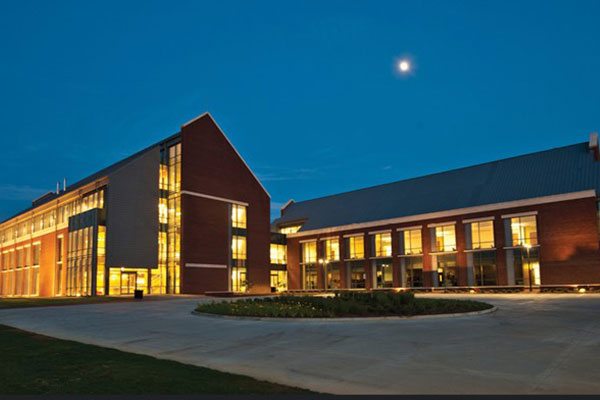
CUSOM, located on 20 acres adjacent to Campbell University’s golf course, houses 96,500 square feet of purpose-built educational space. The facility includes classrooms, laboratories, clinical simulation suites, small group learning areas, student activity space, and administrative offices. Its design reflects the architectural style that characterizes the Campbell University campus, creating a cohesive and welcoming environment. This state-of-the-art building brings medical students, faculty, staff, and administration together to support collaboration and learning.
CUSOM students and faculty have access to more than 10,000 square feet of dedicated research space in nearby Smith Hall, located just a short walk from the medical school. In addition, the 110,000-square-foot Oscar N. Harris Student Union on main campus, less than a 5-minute drive from CUSOM, provides dining options, study spaces, recreation areas, and student services.
Student Residence Options
Student clubs and organizations play an essential role in the CUSOM experience. With more than 30 groups to choose from, students can explore professional interests, develop leadership skills, and serve the community. Participation not only strengthens the surrounding region through service and outreach, but also enriches students’ own personal and professional growth.
CUSOM’s Department of Behavioral Health provides confidential support and counseling services for a wide range of student concerns including burnout, fatigue mitigation, anxiety, depression, academic challenges, study strategies, relationship/family difficulties, stress management, and adjustment to illness and lifestyle changes.
In addition to traditional advising and mentorship by biomedical and clinical faculty, the CUSOM Academic Center for Excellence (ACE) offers robust academic support programs and learning services. These include peer learning partners, study-skills workshops, individual academic coaching, and faculty advising support. The CUSOM ACE also designs and leads programs to assist incoming students develop effective study habits and strategies to support their long-term academic success.
At its April 11, 2024 meeting, the Commission of Osteopathic College Accreditation (COCA) granted the Campbell University Jerry M. Wallace School of Osteopathic Medicine (CUSOM) Accreditation with Exceptional Outcome status, with the next accreditation review scheduled for 2034. Accreditation with Exceptional Outcome status is the highest level of accreditation awarded by the COCA at this time.
In addition, Campbell University is accredited by the Southern Association of Colleges and Schools Commission on Colleges (SACSCOC) and is one of only six private universities in North Carolina to achieve Level VI accreditation, the highest level possible.
University Affiliation(s) Campbell University
-
2024-2025
Academic Year Enrollment
Total Medical School Enrollment
638
Total Male
280
Total Female
358
Total Other
0
First-Year Matriculants
162
First-Year Male Matriculants
76
First-Year Female Matriculants
86
First-Year Other Matriculants
0
Matriculants In-State
82
Matriculants Out-of-State
80
Self-Reported Race/Ethnicity
American Indian/Alaska Native
0%
Asian
24.1%
Black/African American
3.7%
Hispanic/Latino
4.9%
Native Hawaiian/Pacific Islander
0%
White
56.2%
Multiple Races
6.2%
Undisclosed
4.9%
Majors of First-Year Matriculants
Science Majors
85.2%
Non-Science Majors
14.8%
Graduate Degrees
9.9%
Overview
Private Institution
Non-Profit
Campbell University
Institutional Affiliation
2011
Year Founded
Rural
Campus Setting
Campus Contact
Campbell University Jerry M. Wallace School of Osteopathic Medicine - CUSOM
Address
(855) 287-6613 [Toll Free] or (910) 893-1770
Phone
Website
Admissions Office
Curricular Offerings
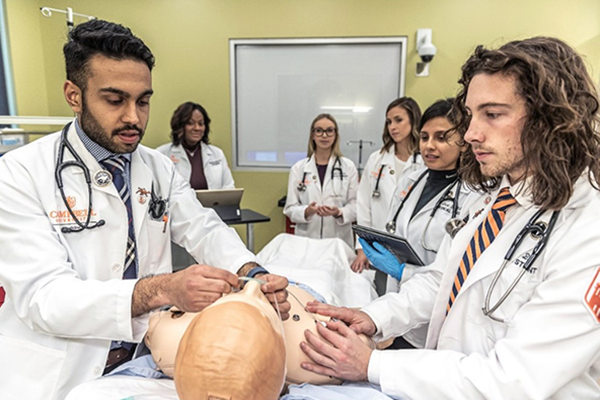
CUSOM delivers a carefully designed systems-based curriculum that blends traditional lectures with interactive case-based learning, small group clinical discussions, simulation and laboratory experiences, and standardized patient encounters. This approach supports osteopathic clinical integration and helps students connect concepts across all four years of training through both vertical and horizontal integration.
Vertical integration weaves clinical skills and reasoning into basic science and system-based courses, reinforcing foundational science during later clinical rotations. Horizontal integration links clinically relevant concepts across basic science disciplines, using them as an integrated focus for lectures, clinical cases, and course materials.
The CUSOM curriculum has been proven successful based on independent outcomes, highly-regarded performance on clinical rotations, and success in residency placement.
CUSOM Curriculum Years 1-2
The first two years of the CUSOM curriculum provide a strong foundation in biomedical principles along with essential training in osteopathic principles and practice, clinical skills, professionalism, and patient care. Content is typically delivered in 10-week Blocks across four semesters, with a one-week break between each Block.
Blocks One and Two focus on fundamental basic sciences, structured to provide clear discipline-specific foundations with meaningful clinical relevance.
Blocks Three through Eight adopt an organ-system approach, integrating basic and clinical sciences in the review of clinical presentations, pathophysiology, diagnosis, and management of common conditions.
Morning lecture and discussions are complemented by afternoon lab sessions, clinical skills training, and scheduled Study Time. Osteopathic Manipulative Medicine (OMM) and other clinical skills are taught longitudinally throughout the first two years in a progressively integrated fashion to ensure students are well prepared for third- and fourth-year clinical rotations. A team-teaching model, with both physicians and basic scientists, reinforces integrated learning throughout the curriculum.
To support student academic success and well-being, CUSOM incorporates protected Study Time into the weekly schedules, helping students assimilate course material while also providing them with personal time. Lecture attendance is not mandatory (except for select sessions), though participation in lab sessions is required due to their collaborative format. These approaches promote student success by allowing them to tailor their study approaches while maintaining a supportive environment and promoting student well-being.
Interprofessional Education
Campbell University places emphasis on interprofessional education (IPE) across its health professions programs. CUSOM students engage in IPE activities during their first two years alongside peers from pharmacy, physician assistant, physical therapy, nursing, and other disciplines. Additional IPE experiences include case conferences, online activities, topic-based discussion groups, and clinical site-based experiences.
Assessment
Assessments include three (3) integrated exams per Block, as well as weekly quizzes, End-of-Block, and End-of-Year summative evaluations. Weekly quizzes, and team-based clinical case conferences help students stay current with the week’s material and provide faculty with real-time insight into student progress.
CUSOM’s four-year curriculum is validated by strong student performance on independent outcomes measures. With comprehensive and frequent assessments, the curriculum maintains high educational quality and contributes to students’ notable success on licensing examinations (COMLEX and USMLE), clinical rotations, and placement into highly competitive residency programs through the ACGME Match.
Clerkship/Clinical Rotations
During Years 3 and 4, Campbell University School of Osteopathic Medicine (CUSOM) students advance into immersive clinical training across a network of regional sites in North Carolina and South Carolina. These rotations offer broad, hands-on experiences in inpatient hospital care, ambulatory practices, and acute care facilities, ensuring that students build strong clinical skills in a variety of real-world settings. Every student also completes a rural medicine rotation, providing meaningful exposure to underserved communities and reinforcing CUSOM’s mission to prepare compassionate, community minded physicians.
CUSOM’s clinical curriculum pairs comprehensive clinical exposure with a robust didactic and online learning program that helps students integrate clinical concepts and continue their academic development while on rotation. Training is supported and supervised by the Office of Clinical Affairs and strengthened by CUSOM’s wide range of partnerships with hospitals, clinics, community physicians, and ACGME residency training programs.
Throughout their rotations, students develop the foundational skills essential for outstanding physicians—medical problem solving, patient diagnosis and management, procedural competence, and professional conduct grounded in integrity and respect. The curriculum emphasizes osteopathic principles, effective physician patient communication, and an understanding of modern healthcare delivery systems.
Students also enjoy the flexibility to personalize their education. With eight weeks of selective rotations in Year 3 and thirty two weeks of elective or selective rotations in Year 4, they can pursue areas of interest, gain additional experience in primary or specialty care, or complete audition rotations at residency programs.
Designed to challenge and inspire, CUSOM’s clinical training cultivates lifelong learners who are ready to excel in any residency specialty while staying true to the school’s commitment to service, leadership, and the health of communities across the region.
CUSOM’s four-year curriculum is validated by strong student performance on independent outcomes measures. With comprehensive and frequent assessments, the curriculum maintains high educational quality and contributes to students’ notable success on licensing examinations (COMLEX and USMLE), clinical rotations, and placement into highly competitive residency programs through the ACGME Match.
Preparatory/Postbaccalaureate Programs Offered
Special Programs
Local and Global Outreach
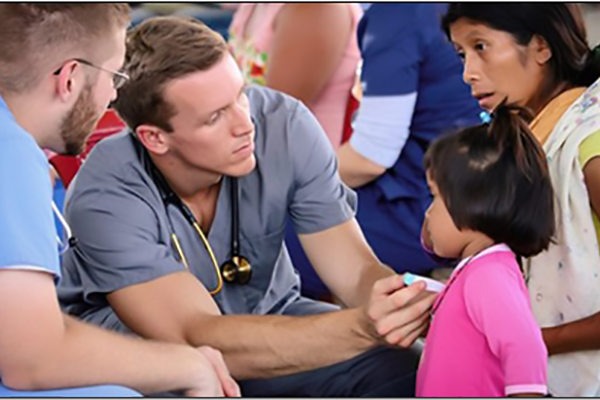
Students have the opportunity to serve the medically underserved with mobile health clinics, free health screenings at events, and other programs addressing local healthcare needs. Students can participate in week-long international mission trips during Block and summer breaks as well as one-month elective experiences during Years 3 and 4. These initiatives prepare students to collaborate in the assembly of multidisciplinary teams to solve health problems locally, nationally, and internationally.
Community Care Clinic
The Campbell University Community Care Clinic (CUCCC) is a student-run initiative delivering high-quality, compassionate healthcare to medically underserved communities of North Carolina through an interprofessional cooperative effort providing an extracurricular learning environment for all of Campbell University’s Health Science Programs.
Medical Student Summer Research Scholars Program (MSSRS)
The MSSRS Program provides summer research opportunities exclusively for CUSOM medical students during the summer between their MS-1 and MS-2 years. There are three different areas of focus: basic science, clinical, and simulation. All participants in the program receive a paid stipend.
Dual Degrees/Concurrent Programs Offered
The dual JD/DO program facilitates education and training of highly credentialed professionals with the skill, expertise, and knowledge to practice in two respected and honorable professions. Graduates are poised to obtain significant positions of leadership, administration, and management and are also well-equipped to serve as leaders in their professional and civic communities, working to make significant contributions at the intersection of law and medicine. The JD/DO Dual Degree Program offers students the opportunity to earn both degrees in six years of full-time study.
Premedical Coursework
Courses below are shown as either Recommended or Required and, when applicable, include the number of semester hours needed.
Anatomy
Recommended3 semester hours
Biochemistry
Recommended3 semester hours
Biology/Zoology
Required With Lab8 semester hours
Chemistry (Inorganic)
Required With Lab8 semester hours
Chemistry (Organic)
Required With Lab8 semester hours
Genetics
Recommended3 semester hours
Immunology
Recommended3 semester hours
Microbiology
Recommended3 semester hours
Physics
Required6 semester hours, lab optional
Physiology
Recommended3 semester hours
Additional Science Courses
Behavioral Sciences
Recommended3 semester hours
College English
Required6 semester hours
Math/Statistics
Recommended3 semester hours
CUSOM utilizes a rolling admissions process. To begin the application process, select CUSOM on the AACOMAS application. Qualified applicants will be invited to submit a Secondary Application. Secondary Applications are granted by invitation only. Applicants must meet minimum admissions requirements to be considered for a Secondary Application. The Secondary Application process consists of the application, a non-refundable processing fee or fee waiver, and two required letters of recommendation. One letter must be from an osteopathic or allopathic physician. Although a letter from an osteopathic physician is not required, it is encouraged. The second letter must be from a Pre-Health Committee, Pre-Health Advisor, or faculty member with a doctoral degree. Letters of recommendation included as part of a Pre-Health Committee packet are accepted.
Following submission of the Secondary Application, qualified applicants may be invited to participate in a CUSOM Applicant Day. Applicant Day, a key component of CUSOM’s holistic applicant process, is a day dedicated entirely to the applicant and utilizes interactive dialogue sessions in place of the traditional, formal “one-on-one” interview.
Applicants consistently speak highly of the informative, low‑pressure atmosphere and the interactive discussions with students, faculty, and staff—key elements that define the Applicant Day experience.
To be considered to receive an invitation to attend an Applicant Day, an applicant must meet all admissions requirements, including the technical and vaccination standards for admission, and have submitted all required application materials (e.g., AACOMAS application, an official MCAT score report, a Secondary Application, required letters of recommendation, and the processing fee or waiver).
Each applicant who participates in an Applicant Day with CUSOM is fully reviewed by the Admissions Committee. The Committee’s decision to offer acceptance is based on academic performance, professional experience, healthcare experience, volunteer/community service, ability to meet technical standards, and participation in Applicant Day.
Interview Options: Virtual interviews only
Physician letter required? MD or DO
Virtual Shadowing Options? Will accept EITHER virtual or in-person shadowing
Accepts online coursework to fulfill prerequisite requirements? Yes
Accepts prerequisite coursework pass/fail grades? Yes
Will your institution waive MCAT exam requirements? No
Accepts online lab coursework? Yes
Primary Application Service: AACOMAS
Earliest Application Submission Date: May 5, 2026
Primary Application Deadline: March 1, 2027
Submission Timing for Best Consideration
First Year Class Matriculant's Selection Factors
CUSOM seeks to recruit students from North Carolina and the Southeastern United States who are committed to serving the rural and medically underserved areas of North Carolina, the Southeastern United States, and the nation. While CUSOM seeks students from these areas, all qualified applicants are considered, and CUSOM classes historically matriculate individuals from across the United States.
International Students Accepted? Does Not Accept International Students
Are Deferred Action for Childhood Arrival (DACA) students considered for admissions? No
Application Interview Format: See Below
Group (Applicant Day, a key component of CUSOM’s holistic applicant process, is a day dedicated entirely to the applicant and utilizes interactive dialogue sessions in place of the traditional, formal “one-on-one” interview.)Early Decision Program (EDP)
EDP Offered? Yes
Admissions EDP Available For
Both In-state and Out-of-State
EDP Application Due Date
June 1, 2026
EDP Supplemental Materials Due
June 1, 2026
EDP Applicants Notified
August 1, 2026
EDP Applications Submitted To AACOMAS
Supplemental Application
Supplemental Application Required? Yes
Secondary (Supplemental) Applications are granted by invitation only. Applicants must meet minimum admission requirements to be considered for a Secondary Application.
The Secondary Application process consists of the application, a non-refundable processing fee or fee waiver, and two required letters of recommendation.
One letter must be from an osteopathic or allopathic physician. Although a letter from an osteopathic physician is not required, it is encouraged. The second letter must be from a Pre-Health Committee, Pre-Health Advisor, or faculty member with a doctoral degree. Letters of recommendation included as part of a Pre-Health Committee packet are accepted.
Earliest Supplemental Application Submission Date: March 6, 2026
Supplemental Application Deadline: March 15, 2027
Supplemental Application Sent To: Screened Applicants
Supplemental Application Fee: $50
Supplemental Application Fee Refundable? No
Supplemental Application Fee Waiver Available? Yes
Please email the AACOMAS Fee Waiver confirmation to cusomadmissions@campbell.edu for the Secondary Application Fee to be waived.Orientation/Start Date for First Year Students
July 21, 2027
Deferred Entrance Requests Considered? Yes
Acceptance/deposit deadlines conform to the AACOMAS Traffic Guidelines Schedule? Yes
Osteopathic Medical College (COM) applicants may be asked to submit necessary matriculation documents, including a deposit, according to the following AACOMAS traffic guideline schedule:
- Those accepted prior to November 15 to have until December 14.
- Those accepted between November 15 and January 14 to have 30 days.
- Those accepted between January 15 and April 30 to have 14 days.
- Those accepted on or after May 1 may be asked for an immediate deposit.
- After May 1 of the year of matriculation, each medical college may implement college-specific procedures for accepted students who hold one or more seats at other medical colleges.
Mean MCAT Score
504.6
Avg. Cum. Undergrad GPA Score
3.61
Oldest MCAT Considered: January 1, 2024
Latest MCAT Score Accepted: January 31, 2027
Accepted Sources for Letters of Recommendation
- AACOMAS
- Interfolio
- Paper
Main Admissions Contact
(855) 287-6613
Phone
Tuition, Fees & Financial Aid
2026-2027 Academic Year
In-State Tuition
$61,180
Out-of-State Tuition
$61,180
Annual Fees
In-State Resident Fees
$2,210
Out-of-State Resident Fees
$2,210
Health Insurance Fee
$4,390
Tuition Fees Include
Estimates, Deposits, and More
Estimated Annual Room Board, Books, and Living Costs
$39,490
Average Graduate Indebtedness
$243,401
Acceptance Deposit
$1,500
Additional Deposit
$0
Deposit Applied to Tuition? Yes
Deposit Refundable? No
Financial Aid Website https://medicine.campbell.edu/admissions/tuition-financial-aid/
Percent of Enrolled Students with Financial Aid 88.43%
Scholarships Offered? Yes
Annual Scholarship/Grant Per Student: $7,556