
Learning to Question, Learning to Care
Published December 18, 2025
Choose DO
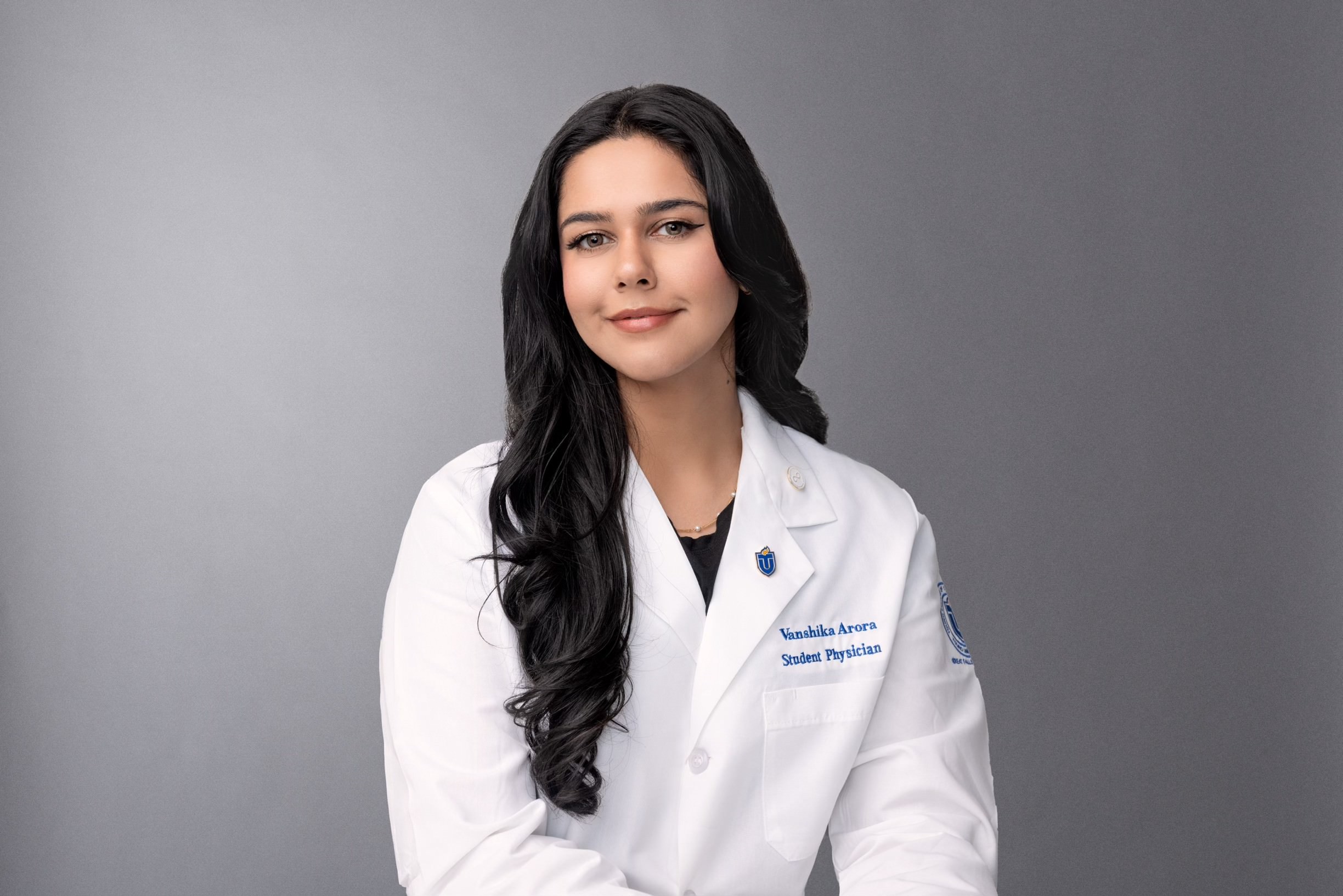
By Vanshika Arora, OMS III, Touro College of Osteopathic Medicine
Every now and then, I look back through the eyes of my fourteen-year-old self—the little girl going through the biggest transition of her life. From moving from India to the United States in the middle of the school year, to navigating undergraduate education in a new country and now finding myself on the path to becoming a first-generation physician in my family, I often remind myself of the experiences that led me to choose osteopathic medicine. Growing up in an environment where medicine means “fix now,” I learned to view healthcare through a lens focused on immediate intervention. When I call my grandparents back home, my recommendations for “lifestyle changes” are always greeted with resistance and I am asked for a pill to fix any medical problems instead. It's interesting how these little things made their way into my subconscious even before I discovered what “holistic” meant.
As a preteen in India, I remember sorting through all the pills everyone was taking at home, and wondering if they had any side effects or if there was a better way to be mindful about one’s health. I would often find myself asking my parents and grandparents as to why they were taking all these medications and the answers I would get were often unsatisfactory. “The doctor asked us to take the pills so we just take them,” which I would follow up with, “What did the doctor explain to you about these pills and your conditions?” The replies always sounded something like, “Who are we to question the doctors? They know what they’re doing.”
“Who are we to question the doctors?” was a statement that stayed with me. It made me reflect on the importance of patient education and autonomy, not only in India, but in the United States as well. After immigrating, I began to realize that although the healthcare systems differed, barriers to understanding and access existed in both. Joining the track team in high school, I became increasingly aware of the complexities of insurance through conversations with my parents—often framed as reminders to avoid injury because receiving care was simply too expensive. Motivated to better understand injury prevention as a sprinter, I discovered osteopathic manipulative medicine (OMM). As an intrigued seventeen-year-old, I was drawn to the idea of using my own hands, rather than medications, to treat the body. For the first time, I felt empowered by the autonomy I had over my own health and healing.
Completing my master’s degree through Touro College of Osteopathic Medicine and earning the opportunity to matriculate into their DO program opened a new chapter in my journey. Finally learning OMM was everything I had hoped for and more. Alongside OMM, I found myself especially drawn to pharmacology—understanding mechanisms of action, recognizing drug interactions and, most importantly, learning how intentional prescribing can help avoid unnecessary polypharmacy.
Now, during my third-year clinical rotations, I have come to appreciate the power of conversation as much as intervention. Whether counseling patients on medications, discussing treatment options or incorporating OMM into their care, I strive to create space for questions and shared decision-making. The phrase, “Who are we to question the doctors?” no longer feels true. Instead, I see medicine as a partnership rooted in trust, understanding and respect.
I still speak with my grandparents about their health and the role of lifestyle in their care, and while old habits are hard to change, our conversations look different than they once did. They serve as a reminder of the responsibility I carry as I continue to grow into my role as an osteopathic physician.