
2025 Osteopathic Medical Education Impact Report
See findings from the inaugural osteopathic medical education (OME) Impact Report. Learn how our community is increasing opportunities for health and well-being across the nation.
About the Report
AACOM and its member colleges of osteopathic medicine (COMs) play an important role in the training and development of tomorrow’s compassionate, competent and culturally aware physicians.
To understand the impact of OME across the nation, AACOM commissioned a study to see how its growing community is contributing to the healthcare workforce and local economic environment.
Osteopathic medicine is a philosophy and practice of physician care that is distinct in its whole-person approach. It prioritizes partnership with patients, considers the connections between body, mind and spirit in delivering care, and recognizes the role of a physician’s hands in diagnosing and treating illness or injury. Doctors of osteopathic medicine, or DOs, are trained to practice the full scope of medicine in the United States and complete subsequent specialty training in residency programs and fellowships in hospitals, community health centers or other clinical settings.
U.S. Osteopathic Medical Colleges
Hover over the location dots to learn about each medical school.
Use the legend menu to sort COMs.
This report demonstrates OME’s vital role in shaping a healthier future for all. Our schools are training physicians who serve where they’re needed most and fueling local economies along the way. Together, we’re shaping competent, compassionate doctors who make a real difference every day.
— AACOM President and CEO Robert A. Cain, DO
Key Findings
Explore the 2025 Impact Report's high-level insights.
Catalyzing Healthier Communities
Hear how our community is advancing health and well-being.
Advancing the Profession
Discover ways AACOM is addressing priorities for the osteopathic profession.
Key Findings
COMs are investing in the communities they serve—Learn how our schools are supporting the physician workforce and stimulating economic development.
The U.S. healthcare system is facing physician shortage expected to intensify over the coming years, leading to a shortage of more than 187,000 physicians by 2037, preventing Americans from accessing timely, affordable and high-quality care.
Growing Number of Osteopathic Physicians
As one of the fastest growing segments of healthcare, osteopathic medicine represents nearly 30 percent of the nation's medical students today. Since 1990, the number of practicing DOs has more than quintupled, from 30,000 to 160,000 in 2025.
COMs are consistently recognized for producing high numbers of graduates serving in primary care, rural medicine and in underserved areas, despite accounting for just 22 percent of all accredited medical schools.
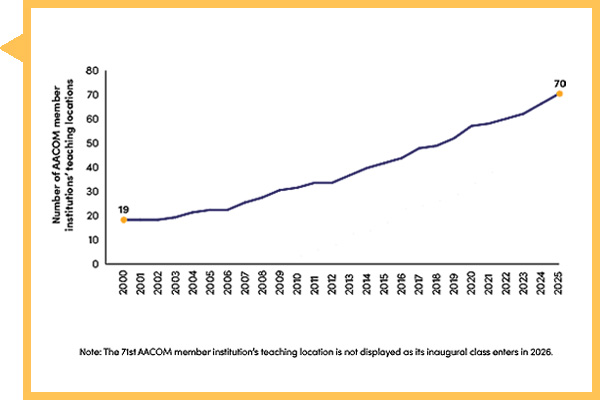
Number of AACOM member institutions’ teaching locations since 2000
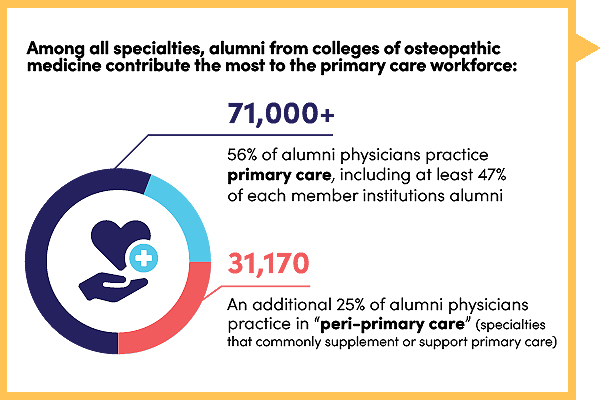
AACOM Member Institutions' Contributions to Primary Care
Addressing Primary Care Physician Shortages
COMs have played a critical role in meeting demands for physicians in primary and preventive care, which is among the medical specialties facing acute shortages.
Fifty-six percent of COM alumni practice in primary care specialties, which includes family medicine, internal medicine and pediatrics.
An additional 25 percent of COM graduates are in fields that often supplement or support primary care.
Of all the COMs analyzed in the study, every school had more than 45 percent of its graduates practicing in primary care.
Serving in Rural and Medically Underserved Areas
Osteopathic medicine has long valued medical practice in rural and underserved communities, areas that are among the hardest hit by physician shortages.
-
Fifty-six percent of COMs are located in Health Professional Shortage Areas
-
Eighty-eight percent of COMs have a public commitment to rural health
-
Sixty-four percent of COMs require clinical rotations in rural and underserved areas
Twelve percent of COM alumni serve in rural areas and 16 percent in Medically Underserved Areas.
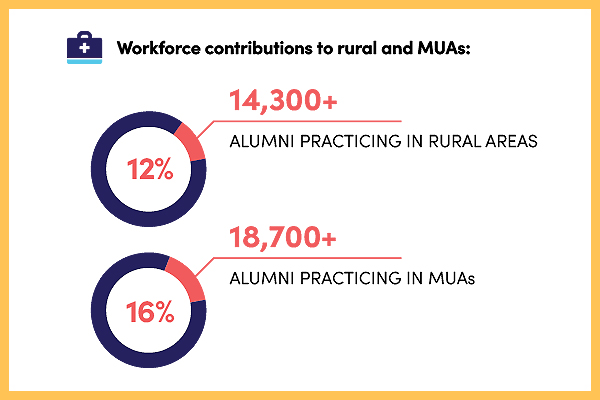
AACOM member institutions' contributions to rural and medically underserved areas
Thirty-eight percent of COM graduates practice in the same state that they received their medical training in.
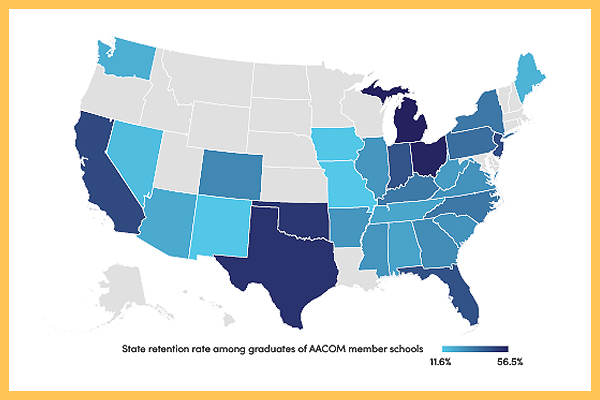
Percent of alumni from AACOM member institutions practicing in the state where they earned their DO degree
Across the country, COMs generated $6.2 billion in economic output in FY23.
AACOM schools directly supported 20,770 jobs, paying out $1.3 billion in wages, salaries and benefits.
In total, COMs supported 38,155 jobs and contributed $3.3 billion in GDP across the U.S.
For every 100 direct jobs created by COMs, 84 additional jobs were indirectly supported in other industries, finance, education and hospitality.
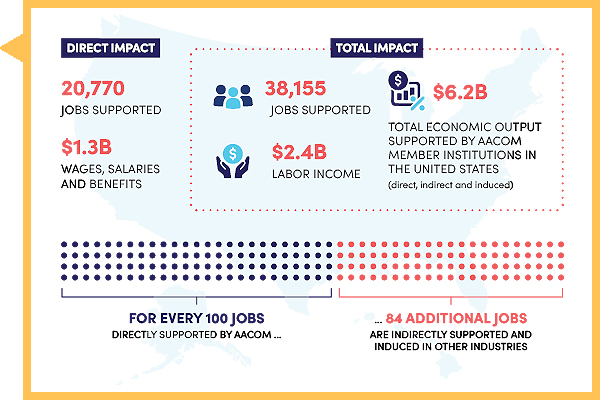
Economic Contributions of AACOM Member Institutions in the U.S.
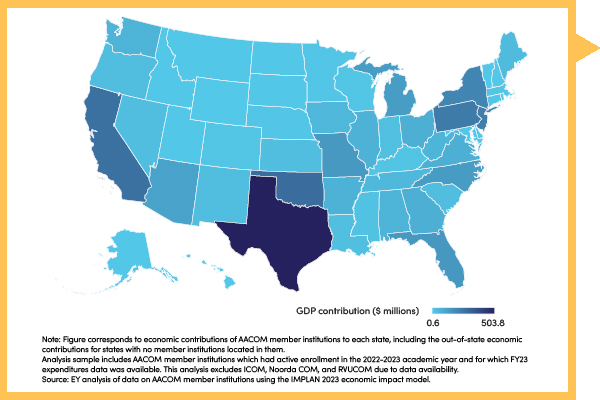
Total (direct, indirect and induced) GDP contributions of AACOM member institutions by state, FY23
Impact Types
Direct
(AACOM schools)
Economic impacts result from jobs created, wages earned and contribution to gross domestic product.
Indirect
(Suppliers)
Economic impacts result from the purchases of goods and services from suppliers within the region in other industries.
Induced
(Employee Spending)
Economic impacts result from consumption spending by the employees of the business and their suppliers.
In collaboration with EY QUEST, which specializes in policy analysis, impact modeling, statistical sampling, analysis and more, this analysis draws on economic development data, workforce growth statistics and alumni practice information from AACOM member institutions.
The analysis uses AACOM-provided data supplemented by IPEDS and IMPLAN economic models to estimate direct, indirect and induced economic impacts, as well as alumni workforce distribution by specialty and geography. Limitations include unavailable data for recent schools and some campuses.
Workforce insights are based on the geographic and specialty distribution of DO graduates, with special attention to service in rural and medically underserved areas. The AMA (American Medical Association) is the source for the raw physician data; statistics, tables or tabulations were prepared by AACOM and EY using AMA Physician Professional Data.
Shaping Healthy Futures through Preventive Medicine
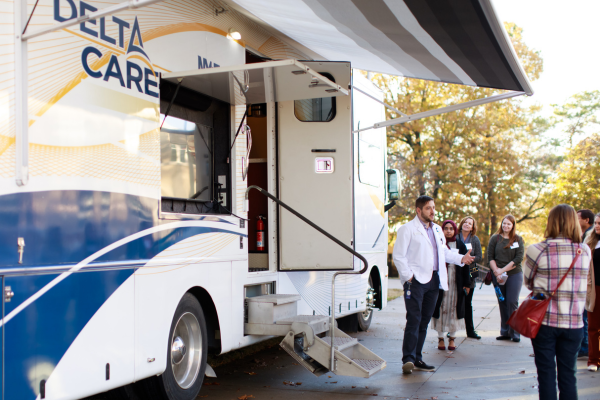
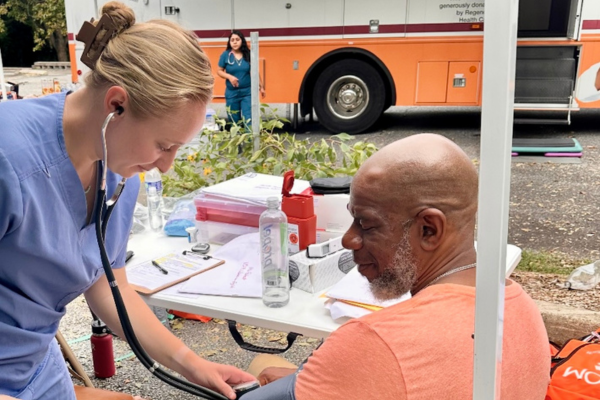
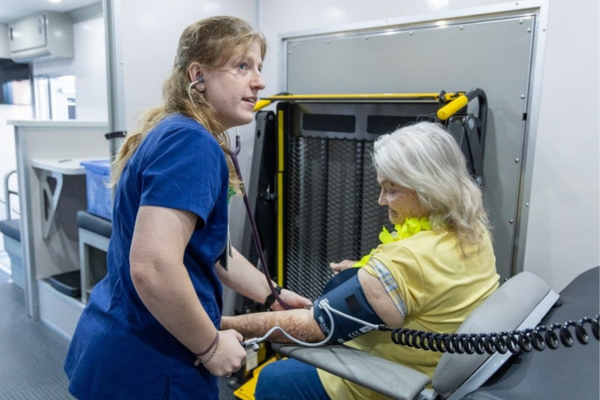
Driving Healthcare Forward: VCOM’s Mobile Medical Response Units in Action
Through VCOM's mobile medical program, students are providing essential care where it’s needed most, build trusting relationships in their community and gain hands-on clinical experiences. Hear VCOM leadership, faculty advisors and students reflect on how this initiative is improving health and well-being in the Carolinas and Louisiana.
Read Full Story | Watch Video
-
 Transforming Crisis Response Training at ICOM
December 03, 2025
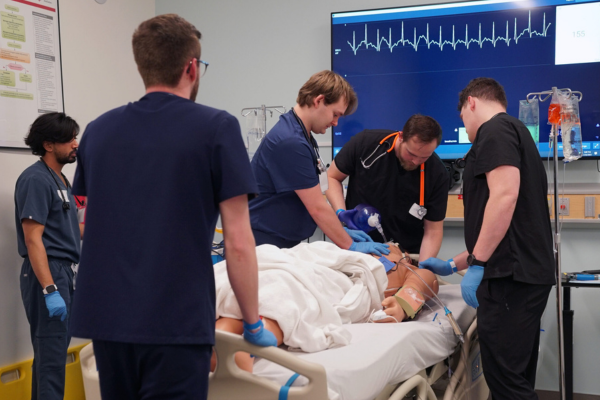
ICOM graduate Mohammad Abuakar, DO, used his background in emergency medicine to expand the impact of healthcare education in his community by shaping preparedness skills in future physicians and strengthening the ties between medical learners and local healthcare response systems.
-
 Neighbors in Action: KCU Students Bridge Health and Hope
December 03, 2025
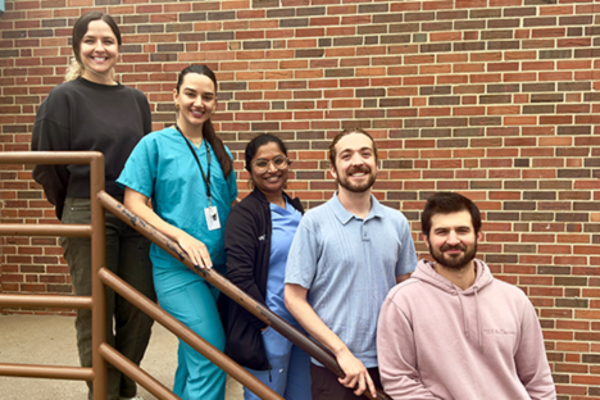
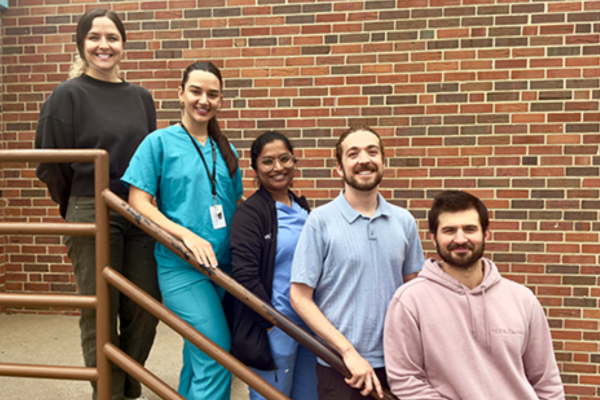
Caring for the health of the community is a neighborhood affair for students at Kansas City University College of Osteopathic Medicine (KCU-COM). As second-year students, Lejla and Mason helped form and implement a pilot program through the KCU Center for Population Health and Equity helping refugees navigate the U.S. health system as they settle into their new home.
-
 Building Healthier Communities Through Policy and Compassion
December 03, 2025
Third-year NYITCOM-Arkansas student Jake Mickelberg shares his perspective as a nontraditional medical student with an interest in leveraging policy to address systemic barriers to health and shaping better health outcomes for his community.
AACOM’s Role in Advancing the Profession
Learn more about AACOM’s priority areas and how you can take action on the issues that matter to you.
AACOM remains focused on its mission: to lead and advocate for the osteopathic medical education community as they educate the next generation of physicians that serve with compassion, practice with integrity and innovate with purpose.
By advancing issues meaningful to the osteopathic medical community, AACOM is not only supporting the growing profession but also transforming the future of American healthcare to improve health across the country.
.png?sfvrsn=4e4257b8_1 "Advancing the profession - Bray 600x400 (2)")
Take Action!
Advocate to expand medical student rotations in rural and underserved communities and ensure graduate medical education parity for DOs.
Learn More



Suggested Citation
American Association of Colleges of Osteopathic Medicine. 2025 Osteopathic Medical Education Impact Report. https://aacom.org/2025-ome-impact-report. Published December 3, 2025. Accessed MM DD, YYYY.