Neighbors in Action: KCU Students Bridge Health and Hope
Published December 03, 2025
Impact Stories Impact Stories Report Page
When Lejla Hodzic's Bosnian family arrived in New Hampshire, the local refugee resettlement program helped them find their place in their new community. That meaningful experience shaped Lejla’s lifelong passion for service.
During her first year at Kansas City University College of Osteopathic Medicine (KCU-COM), Lejla knew she wanted to continue her service work and become an active member of her new community. She couldn’t have imagined the role she’d play in developing the KCU program that aimed to offer the same support and sense of belonging her family received in New Hampshire to her new Kansas City neighborhood.
Lejla came across Della Lamb Community Services, a social services program in Kansas City next door to KCU-COM, and learned they had recently reached out to the KCU Center for Population Health and Equity (CPHE), an initiative launched by KCU in 2024, for additional volunteers to support their growing refugee resettlement program. Catherine Satterwhite, PhD, MSPH, MPH, executive director of the CPHE, and her team were eager to lend a hand.
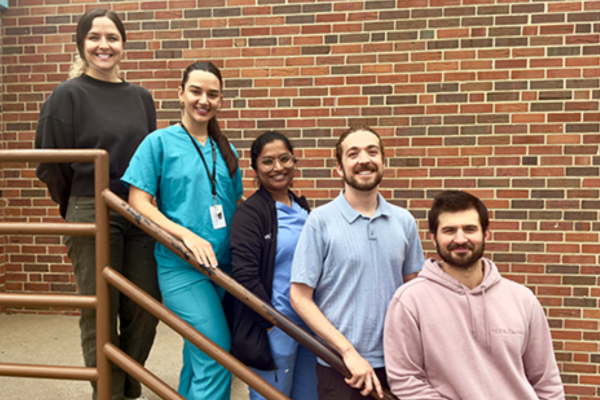
KCU students participating in the Refugee Health Navigation Pilot pose together. Lejla Hodzic, OMS III (pictured second from left) and Mason Tuttle, OMS III (pictured second from right)
Training that Inspires Compassion
Dr. Satterwhite shared, “Through our Student Health Advocate Program, we have a number of different engagements that students participate in. The idea [is] we're partnering with local organizations to advance the work they're doing while providing an experiential learning opportunity for our students. These partnerships reflect the belief at KCU that medical education must go beyond the classroom and that immersing students in real-world situations develops cultural competence and empathy.” This approach to community-centered care is how KCU prepares future physicians to lead and address health disparities nationwide.
Together, they formed a collaborative committee that took learnings from other public-private partnerships and engaged medical student leaders alongside staff at the CPHE and Della Lamb to create the Refugee Health Navigation Pilot.
The pilot places students into the real scenarios patients confront when seeking care—untangling insurance denials, retrieving medical records from multiple sites, deciphering complicated referral processes, arranging transportation across the city and more—compounded with language and cultural barriers refugees experience. Working alongside local partners that are already respected in the community allows students to learn how to interact with underserved communities and cultivate their own meaningful relationships over time.
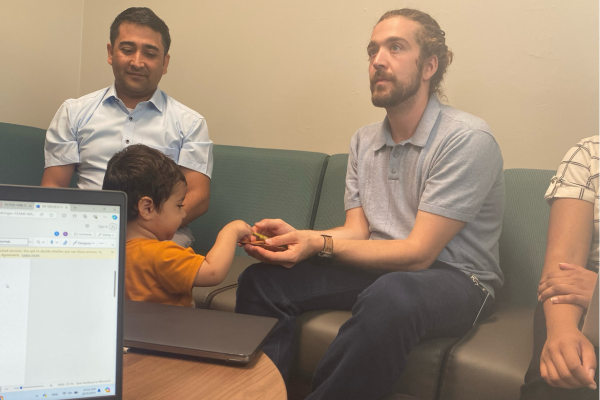
KCU-COM's Mason Tuttle pictured with his clients at Della Lamb
Teams of two students, deliberately composed of a male and a female student to respect cultural preferences and build trust, are paired with each refugee family to help them understand how to reach their health goals. They provide practical support for one year, conducting weekly in-person check-ins to address cultural differences in healthcare and model behaviors to empower refugees to confidently and independently navigate the U.S. healthcare system.
Educational opportunities are abundant, between learning from refugees about cultural practices, understanding the social resources available to clients and engaging with the CPHE physician advisor as learners to explore how they might address their client’s health concerns.
Lifelong Lessons
"Throughout my life I was always an advocate for my family. For my parents, who spoke little English when they arrived from Bosnia, and for my younger siblings, who struggled to voice their thoughts. I grew up experiencing some of the barriers refugees faced when settling in a new country, but this program revealed so much more. It showed me just how deeply non-medical barriers—like language, housing, access to resources—can influence a patient’s overall health. The lessons I’ve learned will stay with me throughout my career, and I hope to continue providing care for underserved populations,” shared Lejla.
For Mason Tuttle, who served as a student leader for the program and is now an OMS III, this experience offered a direct opportunity to address barriers his future patients may face in achieving health and well-being. Reflecting on his experiences, Mason shared, “It was eye-opening to see how difficult accessing healthcare could be for such a vulnerable population, and it's been a great experience for me to see how whole-patient care is so valuable.”
“I was interested in doing this because traveling and experiencing other cultures has been formative for me and shaped my worldview. I’ve always been blown away by the intersection of human interaction and science and how a physician's role is diving through that nuance to find the missing piece of what’s going on in a patient's life. The real job is figuring out, ‘How am I going to help them solve this problem? In a way that fits into their life?’ As I move forward in life, I want to be continually involved in either refugee or immigration health in some way or another,” said Mason.
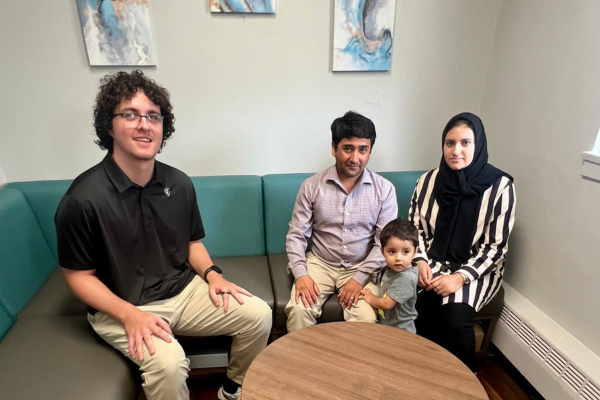
KCU-COM's Parker Townsend, OMS II, pictured with his clients at Della Lamb
Lejla and Mason are examples of a growing tradition at KCU, where community engagement and serving underserved populations are core aspects of the medical student experience.
Melissa McAtee, BS, operations manager for the CPHE, reflects on the lessons participants take away. “One beauty that I see in this project is getting [students] to ask the question, ‘Why?’ It's going to make them better physicians, [help] them be more empathetic and it'll make a difference in our world.” By fostering this mindset early, KCU graduates enter the workforce equipped to serve with empathy and insight.
Supporting Resilient Communities
For individuals, families and community partners, the presence of KCU-COM students is more than a helping hand—it is a lifeline. The relationships forged through this pilot extend beyond medicine: they offer companionship and a tangible reminder that someone in the community cares. In times when community organizations may be stretched thin by funding or staffing shortages, students fill crucial gaps in day-to-day support that enable caseworkers to focus on broader needs.
“Providing our clients with this additional resource [through the pilot] has been really incredible. Resettlement was never intended to lie solely on the shoulders of the resettlement agency. It was always intended to be a public-private partnership. Our partnership with KCU is an extension of that belief, and it’s allowing our clients to get better care and encouraging them in their own journey towards self-sufficiency,” says Refugee Services Director of Della Lamb, Sarah Kolsto.
The commitment of KCU to community health shines through the CPHE, which supports the development of compassionate physicians and empowers their communities to thrive. As the Refugee Health Navigators Pilot transitions into a dedicated program, all those involved are eager to strengthen the bridges between student physicians and their neighbors to improve health.
 Lejla is an OMS III at Kansas City University College of Osteopathic Medicine. She is the daughter of Bosnian refugees, who came to the United States in 2000, and one of four children. Growing up, she often served as an advocate for her family, helping her parents navigate language and cultural barriers, which sparked her lifelong passion for advocacy. That passion ultimately led Lejla to cofound the Refugee Health Navigation Program, an initiative very special to her. Her interests in medicine lie in dermatology and oncology, where she hopes to continue combining clinical care with service to underserved communities. In her free time, she enjoys playing soccer, cooking and going on long nature walks.
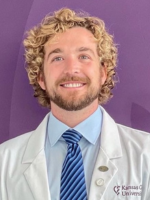 Mason is an OMS III at Kansas City University College of Osteopathic Medicine, completing his clinical rotations in Denver, Colorado, where he attended the University of Denver for his undergraduate and master's studies. Mason is passionate about public health and decreasing health inequities in underserved communities. In addition to his work with refugees, he has volunteered extensively with harm reduction organizations over the years to improve health outcomes in people who use drugs amidst the opioid epidemic. Beyond his hands on work, he has taken an interest in organized medicine and advocacy at the local and national level with Missouri State Medical Association and American Medical Association. He is in the Global Health track at KCU and will be traveling to Kenya to complete his Family Medicine rotation in December where he will conduct research on the prevalence of hypertension and the risk factors associated with it in urban and rural Kenyans. He is interested in incorporating Global Health into his future career and giving back to his local community. He is planning to pursue residency training in anesthesiology.
Spread the word!
When a family arrives in a new country, navigating healthcare can be overwhelming. @KansasCityU students are stepping up, walking alongside refugee families, breaking down barriers and building trust through the Refugee Health Navigators Pilot. Learn how medical students are becoming true neighbors in care.
Whole-person care starts with the community. Through the Refugee Health Navigators Pilot, @KansasCityU students are learning how culture, access and lived experience shape health—and helping refugee families overcome the barriers that stand between them and the care they deserve.
"Throughout my life I was always a [health] advocate for my family. I grew up experiencing some of the barriers refugees faced when settling in a new country, but this program revealed so much more. The lessons I’ve learned will stay with me throughout my career, and I hope to continue providing care for underserved populations,” shared Lejla Hodzic, OMS III at KCU-COM. Check out her perspective helping form the KCU Refugee Health Navigation Pilot.
Non-clinical barriers—like language, transportation and understanding of the healthcare system—can impact health as much as any diagnosis, say KCU-COM students Lejla and Mason. Their work with the KCU’s Center for Population Health and Equity helped underserved families in their community navigate cultural and systematic barriers to health. Learn more about their perspectives.