Championing Overdose Prevention and Community Care in California’s Central Valley
Published January 20, 2026
Impact Stories Impact Stories Report Page
Substance use disorders (SUDs) touch nearly two-thirds of all American families, impacting the health and well-being of individuals using substances and their loved ones. During the COVID-19 Pandemic, there was an unprecedented rise in substance use and related overdoses as people coped with isolation. Seeing the negative impact of substance use-related overdoses in their community, California Health Sciences University College of Osteopathic Medicine (CHSU-COM) students formed the Overdose Prevention Committee (OPC) to locally address the issue in California’s Central Valley. 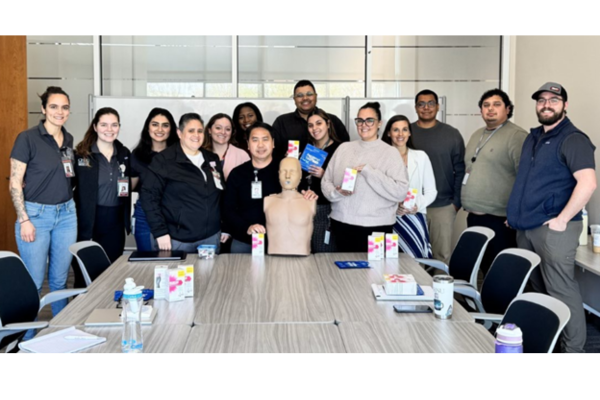
Overdose Prevention Committee Trains the CHSU Office of Student Affairs on How to Identify and Respond to an Opioid Overdose.
Aicha Naouai, third-year medical student and previous rotating chair of OPC, was initially drawn to the program because the practice of caring for individuals with SUDs aligned perfectly with the osteopathic philosophy that drew her to medicine.
“[Addiction medicine] focuses a lot on the body, mind and spirit. We know that the impacts [of substance use] can be happening in the body, but the root causes can be mental turmoil or not having basic needs met. I can imagine it’s difficult for someone to address their substance use if they don’t have shelter, if they don’t have food, if they don’t have a support system or if they’re dealing with trauma,” Aicha explained.
CHSU-COM’s OPC uses a public health approach to reduce overdoses and harms around SUDs, which disproportionately impact underserved communities. Under Aicha’s leadership, the group worked to increase education on overdose prevention, provide harm reduction services that reduce risks associated with substance use, train students to administer naloxone—the medication capable of reversing opioid overdoses—and more. Additionally, to decrease the stigma around substance use within the medical field, they organized talks with experts in addiction medicine and individuals on their recovery journey to allow students to learn about recovery and access the same types of continuing education that practicing physicians receive.
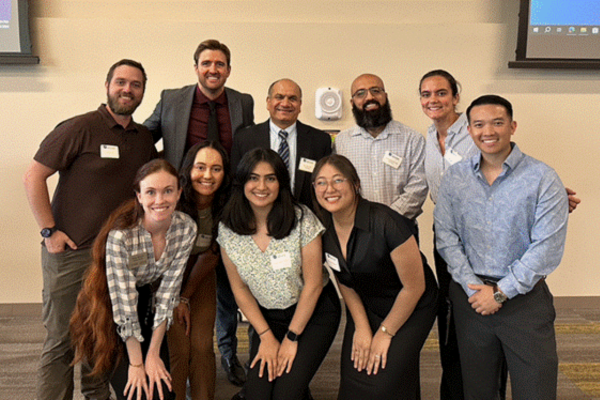
OPC partnered with the Fresno Madera Medical Society to host the second annual Addiction Medicine Updates Continuing Medical Education event.
Empathetic care for individuals with SUDs and reducing the stigma associated with receiving care for substance use are important lessons that OPC’s faculty advisor Francisco Ibarra, PharmD, BCCCP, aims to instill within OPC members.
“Our events give students an opportunity to start developing their patient interaction and communication skills. If [patients] don’t think that you really care or if you’re judging them, they’re not going to be vulnerable or open to your help. [Worse], they could leave and never come back. Being at this early stage in their careers, it lets students know how they can become more compassionate and understanding [of this population].”
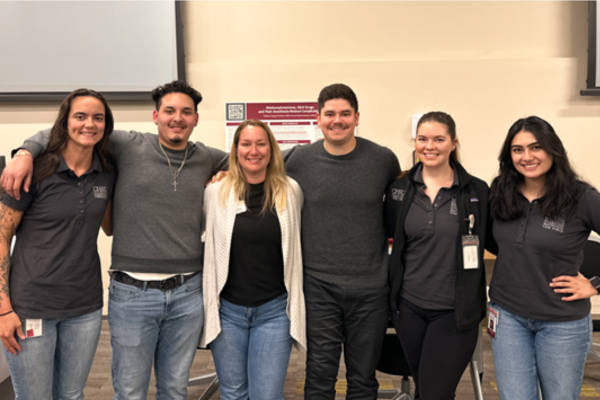
OPC hosts substance use disorder recovery panel. From left to right: Aicha Naouai, Julian Carvajal, Miranda Rogers, Sigi Rodriguez, Mariya Leshchuk and Negin Fadaee.
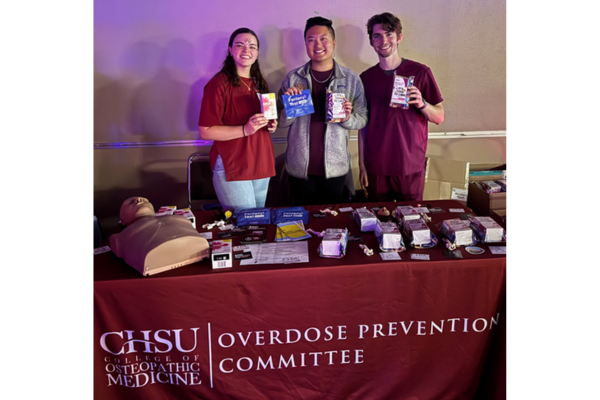
OPC offers its services to music festival attendees at the Fresno State University’s Glow in the Garden event. From left to right: Brooke Guenther, Phil De Vera and Ethan Kuss. 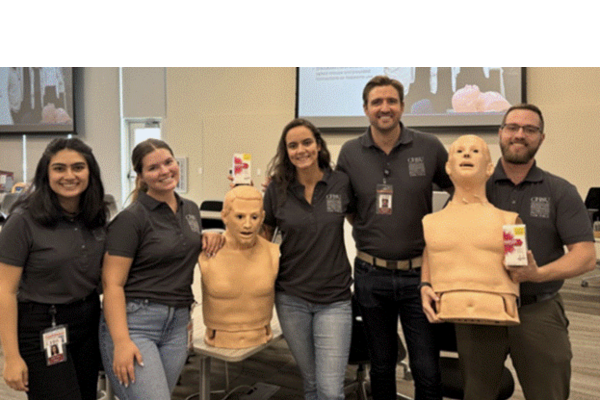
Each year, OPC equips incoming first-year medical students with life-saving overdose response skills through its annual naloxone training.
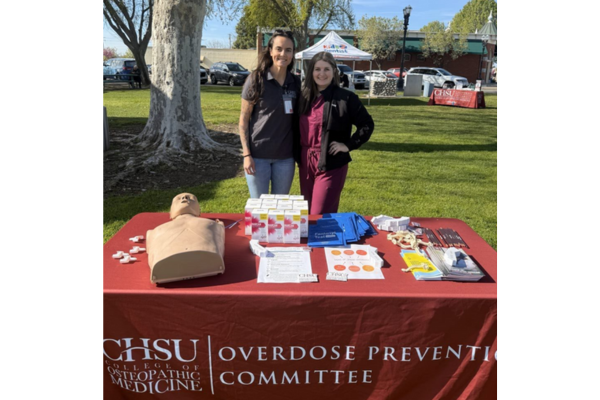
OPC provides harm reduction resources at local health far in Selma. From left to right: Aicha Naouai and Abigail Grigoryan.
As advisor, Dr. Ibarra uses his expertise to guide students as they learn, expand their projects and forge new partnerships to achieve OPC’s goals.
“I'm their wing man. I use my role as an established provider in the community to help [students] meet people in my network and allow them the opportunity to make their own connections,” said Dr. Ibarra. OPC’s student-led partnerships now include the Department of Public Health, the Fresno Madera Medical Society and the CA Bridge. Through these relationships, students have gained opportunities to participate in state-based programming, co-sponsor continuing education and outreach events as well as support local institutions with training events.
A recent collaboration with Fresno State University regularly brings OPC students to the campus to provide education and harm reduction materials. Dr. Ibarra shares that the new OPC leadership team is interested in replicating previous success on other campuses and looking to gain footholds with new student organizations.
"Our new team is looking to establish ties with the other local community colleges and get in touch with the local fraternities and sororities to discuss the harms of substance use and offer them naloxone training too,” said Dr. Ibarra.
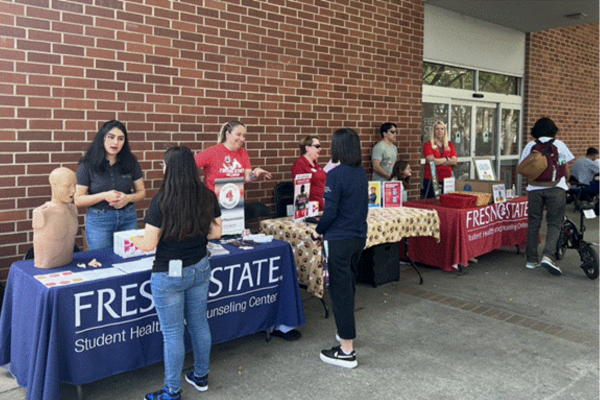
Each month, OPC joins Miranda Rogers, an Alcohol and Other Drug Prevention and Recovery Specialist, at Fresno State University to distribute harm reduction resources and provide education on overdose response.
In addition to providing useful educational experiences, OPC offers CHSU-COM students an opportunity to remind themselves of why they chose to become doctors. “It gives students a chance to get out there in the community and start applying what they've been learning in class. I think it also recharges their batteries, mentally speaking. When they come back to class, they have a little more pep in their step,” said Dr. Ibarra.
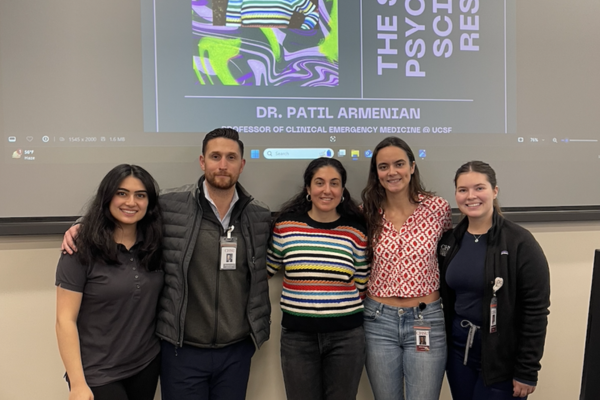
OPC hosted UCSF emergency medicine physician, toxicologist and psychedelic science expert. From left to right: Negin Fadaee, Dr.Ibarra, Dr. Patil Armenian, Aicha Naouai and Mariya Leshchuk.
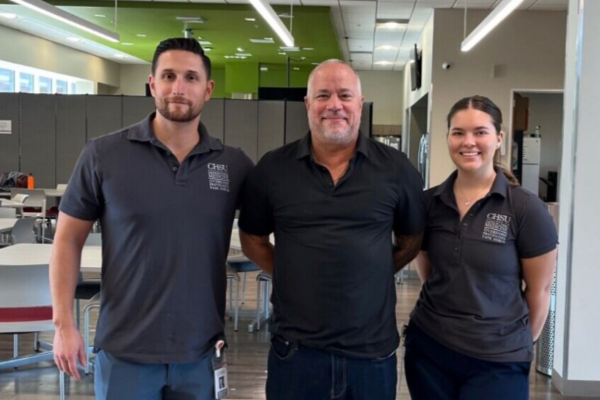
OPC hosts fentanyl subject matter expert and task force officer for the Drug Enforcement Administration in Fresno. From left to right: Dr. Ibarra, Detective Dean Cardinale and Mariya Leshchuk.
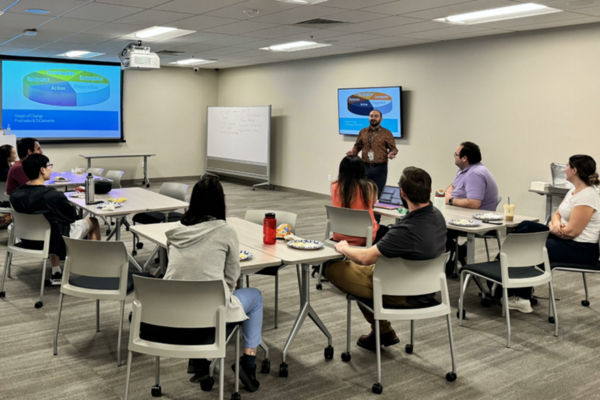
OPC hosted Jonathan Terry, DO, to lead a Motivational Interviewing Workshop, offering students a valuable opportunity to enhance their patient-centered communication skills.
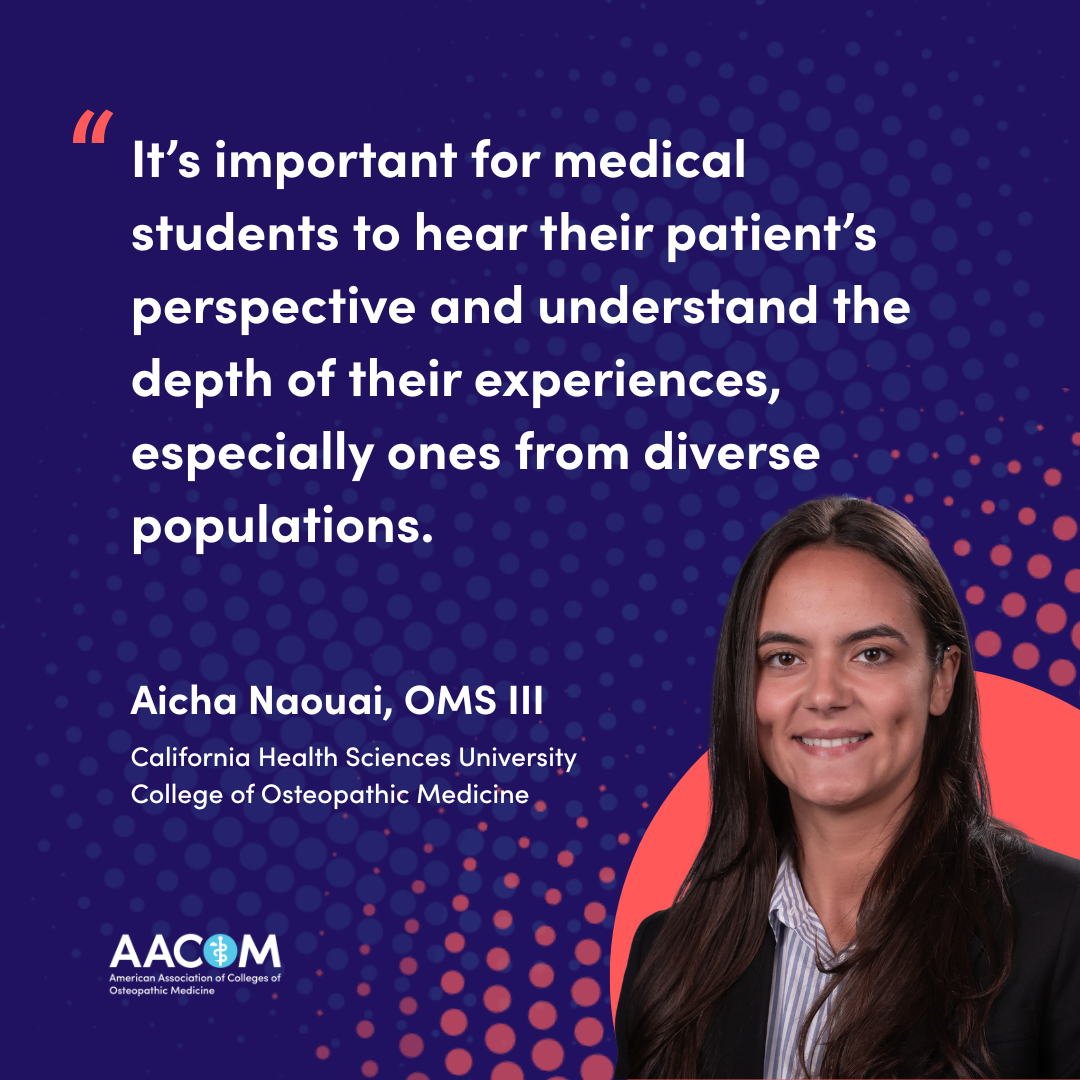
Aicha shared one such experience from a panel discussion OPC hosted that elevated voices from individuals in recovery. “It was a really impactful session. Everyone was crying. It was also interesting because each speaker’s stories had such parallels. Obviously very different stories, different backgrounds, different people, different ages and genders and ethnicities, but they all shared that on some level, they always felt like they weren't good enough. Once they started using substances, that feeling went away. It’s important for medical students to hear their patient’s perspective and understand the depth of their experiences, especially ones from diverse populations,” she said.
Dr. Ibarra added, “One of the individuals shared with the group that they've never felt so judged on the road to recovery as when they would go to the emergency department to get help. And that really resonated with the students. Once our group heard that, we knew we had to have an emergency medicine physician speak with our students about their experiences managing patients with SUD and how future doctors can better prepare themselves for addressing their patients’ needs with compassion.”
These and many more formative experiences led Aicha to pursue leadership at the national level, now serving as a regional chair under Student Osteopathic Medical Association, helping advise other colleges of osteopathic medicine with their OPC programs. She looks forward to exploring different specialties in her third year and seeing what sparks her interest.
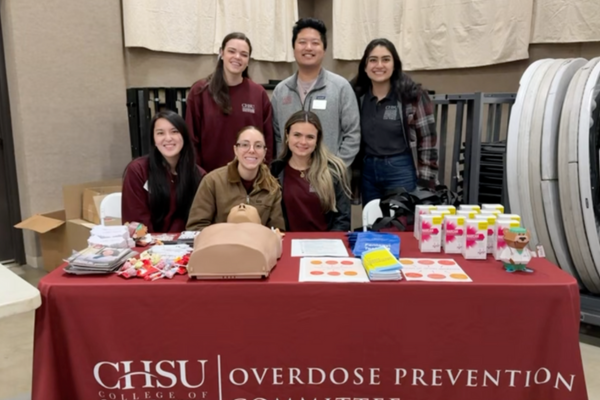
CHSU-COM Student Groups Collaborate at MiMentor’s Community Health Fair. Standing left to right: Brooke Guenther, Phil De Vera and Negin Fadaee. Seated left to right: Savanna Lee, Giana Davlantes and Briana Anderson.
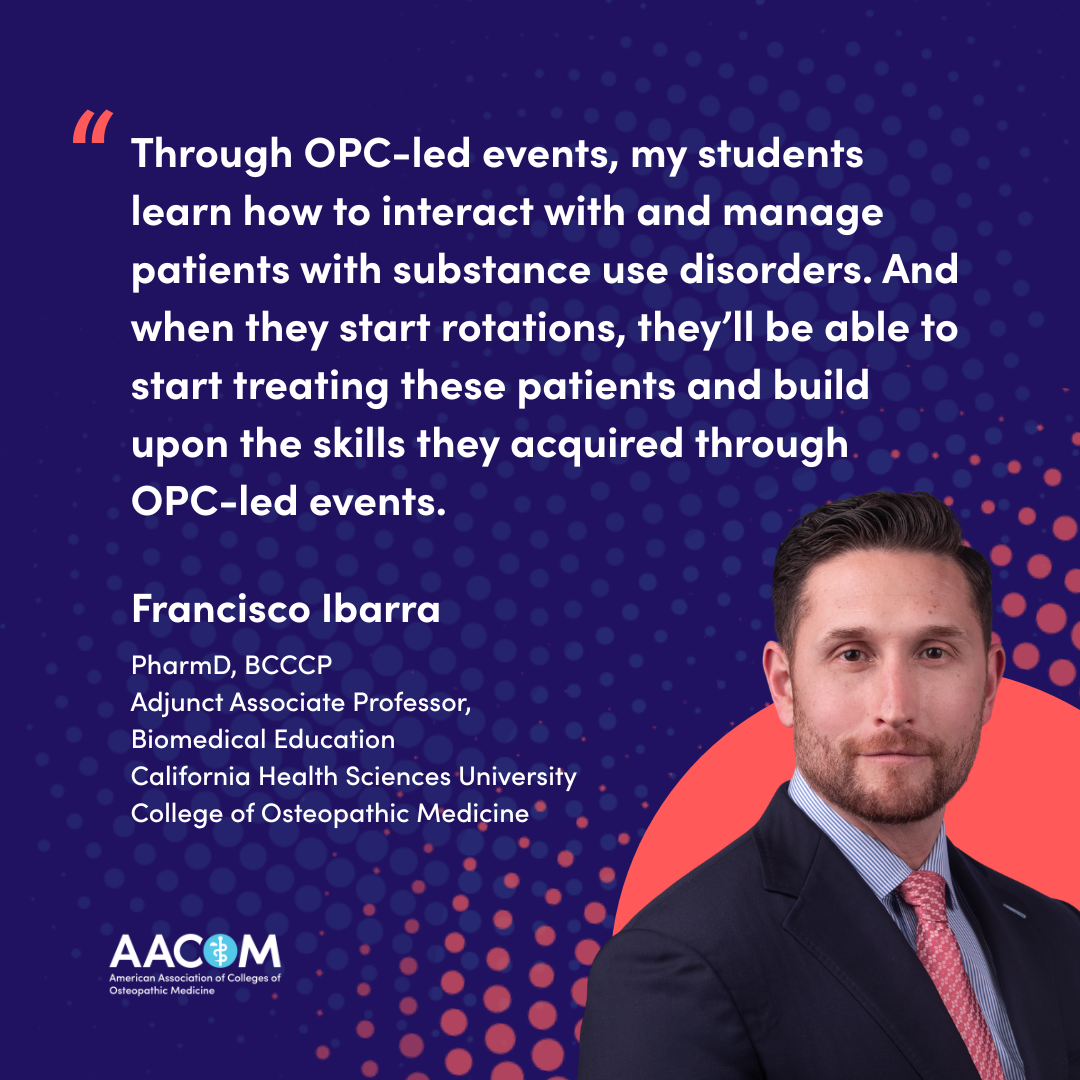
As OPC evolves, Dr. Ibarra hopes to expand the services they’re able to offer and better prepare his students for managing patients with substance use disorders, sharing, “through OPC-led events, my students learn how to interact with and manage patients with substance use disorders. And when they start rotations, they’ll be able to start treating these patients and build upon the skills they acquired through OPC-led events.”
By empowering students to lead compassionate, community-focused initiatives, the CHSU-COM OPC is transforming both medical education and patient care in California’s Central Valley. Their ongoing work serves as an inspiration for future physicians confronting stigma and uplifting those affected by SUDs.
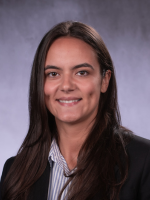 Aicha Naouai is originally from Bloomfield, New Jersey, and grew up working weekends in food service at her family’s coffee shop. She earned a bachelor’s degree in psychology from the University of South Florida in Tampa, Florida, where she developed a deep appreciation for higher education and the privilege of learning. Through volunteering in hospitals and working as a medical assistant, she decided to pursue a career as a physician. She was drawn to the concept of lifelong learning and the responsibility of leadership in a healthcare setting, along with a strong desire to bring a more interpersonal, patient-centered approach to medicine. Aicha is now a third-year medical student at CHSU-COM, and excited to be figuring out what specialty to pursue. During her first two years, she held leadership roles in the OPC, as well as Valley Reach, serving as co-clinic coordinator for the local Street Medicine and Needle Exchange program and Lavender Alliance, the school’s LGBTQIA+ organization. She continues to support OPC at a national level as the Region 5 Administrator. Outside of medicine, she can be found watching reality TV with her partner and two dogs, baking something sweet or playing kickball with friends.
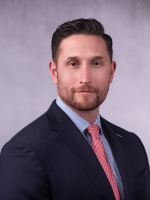 Dr. Ibarra is an Emergency Medicine Clinical Pharmacist at Community Regional Medical Center in Fresno, California. He serves as an adjunct associate professor at CHSU-COM, where he is the faculty advisor for the Overdose Prevention Committee. Additionally, he is an associate clinical professor at the UCSF School of Pharmacy and the lead clinical instructor for Emergency Medicine Pharmacotherapy within the UCSF Fresno Emergency Medicine physician residency program. Dr. Ibarra completed a PGY-2 Critical Care Pharmacy Residency at The Johns Hopkins Hospital and a PGY-1 Pharmacy Residency at Stanford Health Care. He earned his Doctor of Pharmacy degree from the UCSF School of Pharmacy.
Spread the word!
- When California’s Central Valley experienced a rise in overdoses, CHSU-COM students created a program to locally address the issue through training, harm reduction and prevention services. See how the Overdose Prevention Committee is training future physicians to care for individuals with substance use disorder with compassion and dignity.
Through service, engagement and compassion, future physicians at CHSU-COM are helping their community reduce overdoses in California’s Central Valley. Learn more about the innovative program that leverages public health, #harmreduction and naloxone training to support individuals with substance use disorders.