Transforming Crisis Response Training at ICOM
Published December 03, 2025
Impact Stories Impact Stories Report Page
As a child, Mohammad Abuakar witnessed the life-saving potential of emergency medicine when his younger brother survived cardiac arrest shortly after birth. This moment ignited a passion for emergency medicine and took him on a journey to lead his medical school community in preparing for mass casualty medical events.
The DO Difference
Mohammad first encountered the osteopathic profession in his hometown, Chicago. As a technician in the emergency department, his medical director was a doctor of osteopathic medicine (DO) along with several of the physicians he worked with.
He quickly found there was something different about the DO philosophy—treating the whole person through body, mind and spirit.
“I always loved working with the DOs. They always seemed so willing to see the whole picture and help patients from all sorts of different backgrounds. I got to see what the osteopathic medicine profession was all about early on and experience what that meant for patients,” Mohammad said.
Inspired by these encounters, Mohammad chose Idaho College of Osteopathic Medicine (ICOM) and joined their Emergency Medicine Club. Here, he recognized a gap in his studies compared to his real-world experience: a lack of comprehensive training for mass casualty scenarios.
The number of mass casualty incidents (MCIs) is growing, Mohammad explained, and there are a lot of variables, from care to collaboration, to navigate during this high-pressure and high-volume situation. “I wanted to expose my fellow ICOM students to the roles they may have to play and how the system works to make sure they are prepared to step in and save patient lives.”
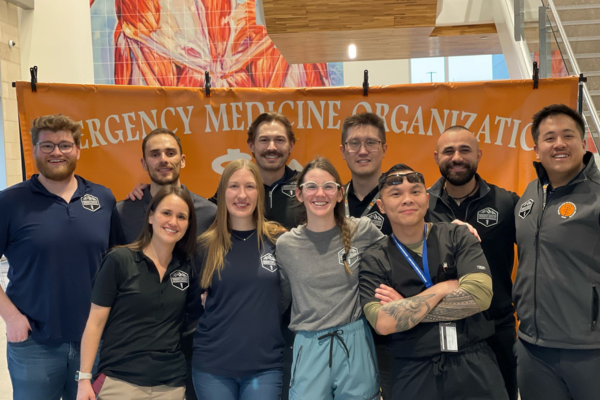
Mohammad, DO, with the ICOM Emergency Medicine Club in February 2025
Leveraging his own paramedic training, he envisioned a program that would equip students with the skills needed to succeed in the chaos of emergencies while fostering partnerships among ICOM learners and the broader healthcare community. This ambitious idea was deeply rooted in his belief that preparedness saves lives and transforms patient care.
Determined to make this vision a reality, Mohammad approached ICOM faculty with his idea for an MCI Simulation Training program.
“It was the quickest no I've ever heard, but for a good reason,” said Mohammad.
Although his idea was initially met with skepticism and worries this would detract from his studies, Mohammad wasn’t ready to call it quits. He drafted an exhaustive 78-page proposal detailing every aspect of the simulation—from logistics and costs to contingency plans and liabilities. His thorough planning and clear articulation of the program's value earned him overwhelming support from faculty and peers, marking the beginning of a groundbreaking initiative.
A Growing Healthcare Community
The inaugural, student-organized MCI simulation event brought together more than 200 participants from diverse backgrounds, including emergency medical technicians and paramedics, military students, representatives from the Idaho Medical Academy and even students from the local cosmetology school, who created realistic injuries for community members participating as patients. The event provided medical students with hands-on experiences, bridging the gap between theoretical knowledge and practical application in an intense environment where the system is overwhelmed.
ICOM Student Doctors Conduct Mock Mass Casualty Exercise
“Real applications, working with people in the field and creating those connections, help you become a better physician that is mentally and physically prepared,” shared Mohammad.
Now going into its third year, the program has continued to grow, incorporating new groups like the fire department and expanding its scope to include incident command training and vehicle extrication exercises.
Speaking to the value of this project, Mohammad shared that beyond the student learning, this event helped the local fire and EMT departments complete their national, mandatory training requirements and provided a strong foundation for students looking to serve their community in emergency medicine after graduation.
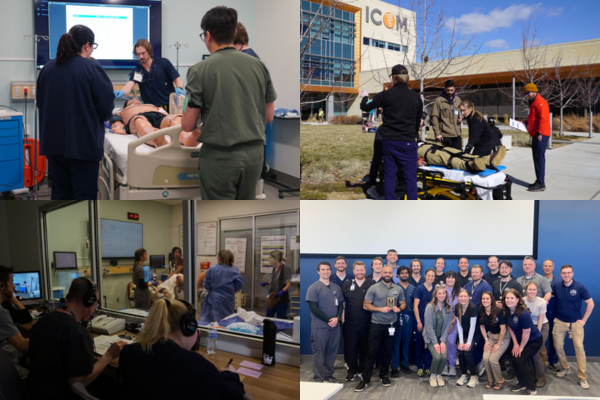
ICOM students participating in the inaugural MCI training program treating patients
ICOM played a pivotal role in facilitating Mohammad’s vision. As a newer medical school in Idaho, ICOM offered a unique opportunity for students to pioneer innovative projects. Faculty and administration became strong advocates for the MCI training program, ensuring its sustainability and growth over the years. Mohammad attributes much of the event's success to the faculty’s willingness to support student-driven initiatives and the collaborative environment that ICOM fosters.
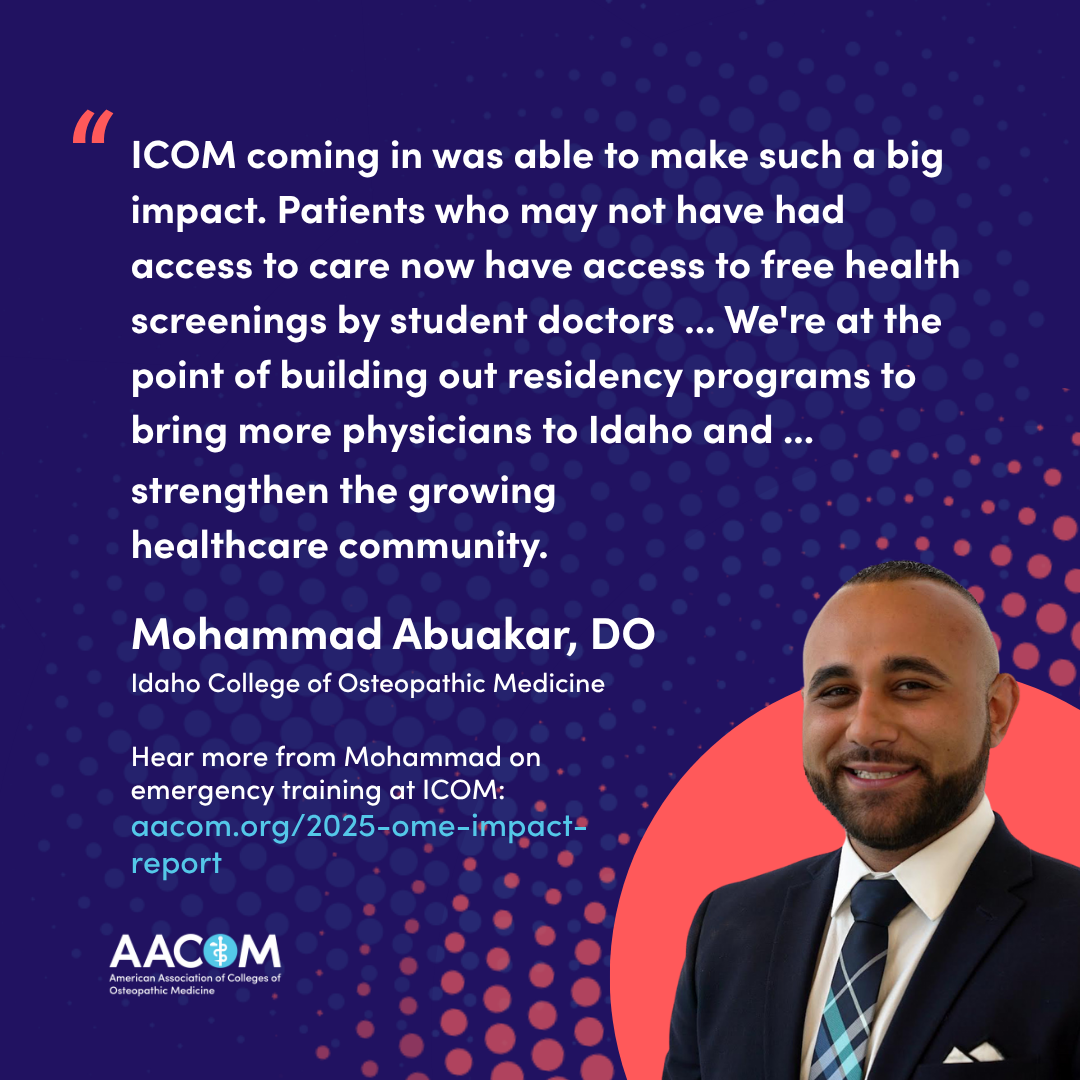
“There was no medical school established in Idaho before ICOM,” Mohammad shared. “ICOM coming in was able to make such a big impact. Patients who may not have had access to care now have access to free health screenings by student doctors, who get to practice some of their skill and are supervised by the attending physicians and faculty.”
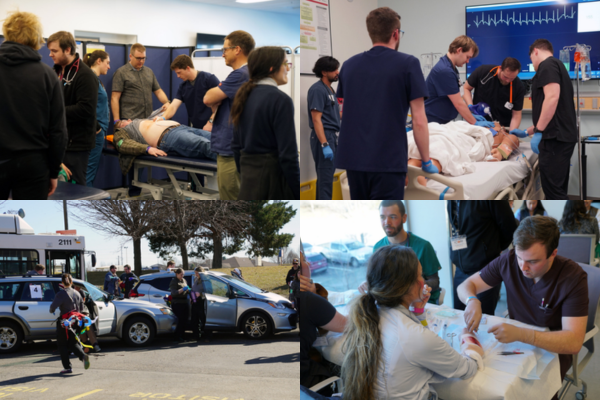
ICOM students in the second annual MCI training program, which included a vehicular incident for students to respond to
“We're at the point of building out residency programs to bring more physicians to Idaho and our ability to participate in events like our simulation is strengthening the growing healthcare community. It’s all revolving around ICOM being here.”
After graduation, Mohammad started his emergency medicine residency at Advocate Christ Medical Center in Chicago—the very hospital where he and his siblings were born and his journey into medicine began. At ICOM, he leaves behind a powerful legacy that is contributing to a flourishing community of healthcare professionals.
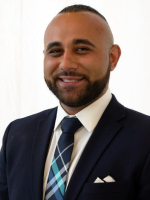 Mohammad Abuakar, DO, is an emergency medicine resident physician at Advocate Christ Medical Center. He graduated from Idaho College of Osteopathic Medicine in 2025. His background includes being a critical care paramedic and being an ACLS/PALS/BLS instructor. He completed his training as a Paramedic at Malcolm X College and a Critical Care Paramedic at the University of Iowa Hospital and Clinics. In addition to his medical training, he holds a Bachelor of Science in Finance, graduating cum laude and with high distinction, from the University of Illinois at Chicago in 2016. His professional experience includes serving as a Mobile Stroke Unit Critical Care Paramedic at Northwestern Medicine Central DuPage Hospital and as a Municipal Fire Paramedic at Wheaton Fire Department. He possesses experience in pre-hospital critical care.
Spread the word!
When ICOM student Mohammad Abuakar saw a gap in emergency preparedness training, he built a program that brought together students, first responders and community partners for high-intensity, hands-on crisis response training. See how his Mass Casualty Simulation is transforming healthcare education in Idaho.
What started as one student’s idea is now a multi-agency Mass Casualty Simulation involving EMTs, fire departments, military students and community volunteers. Discover how this ICOM-led initiative is helping Idaho build a stronger, more connected healthcare response system.
“I wanted to expose my fellow ICOM students to the roles they may have to play and how the system works to make sure they are prepared to step in and save patient lives,” reflects Mohammad Abuakar, DO, on his passion for emergency medicine and launching ICOM’s first Mass Casualty Simulation Training in our latest feature. Check out the full story.
Learn how one student’s passion for emergency medicine led him to found a Mass Casualty Simulation program during his time at ICOM and nurture connections between the growing health professional communities in Idaho! Read Mohammad Abuakar’s feature.