
Osteopathic Medicine Gets National Spotlight During Congressional Hearing
Published March 09, 2026
By AACOM Government Relations
Advocacy Federal Policy Graduate Medical Education OME Advocate
On February 24, 2026, the House Ways & Means Subcommittee on Health held a pivotal hearing on “Advancing the Next Generation of America’s Health Care Workforce.” The hearing focused on worsening physician shortages and how federal policy, especially Medicare Graduate Medical Education (GME), can help expand and strengthen the nation’s physician workforce. Witnesses, including Thomas J. Mohr, MS, DO, vice president of medical affairs and dean of the Sam Houston State University College of Osteopathic Medicine, highlighted the urgent need for more GME investment and innovative approaches to residency training, particularly in rural and underserved communities where shortages are most acute.
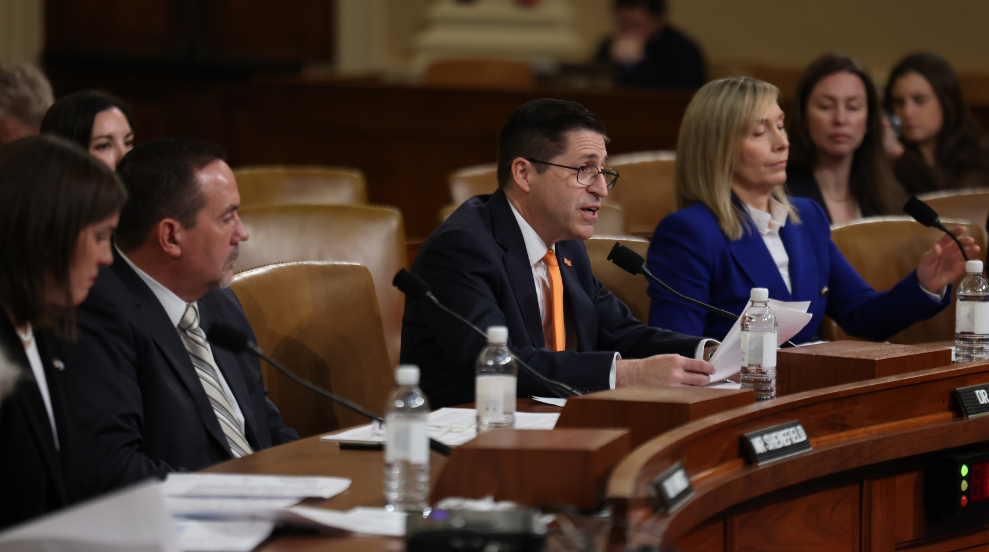
Dr. Mohr emphasized osteopathic medicine’s community-based training model and how it trains DOs to address access gaps, noting that osteopathic physicians are disproportionately more likely to enter primary care fields and serve underserved communities. He also outlined ongoing barriers within GME, including obstacles for osteopathic graduates, and highlighted the Fair Access In Residency (FAIR) Act, H.R. 2314/S. 2715, as a solution. Lastly, he advocated for modernization of Medicare GME policy to support distributed training models, rural hospitals and community-based residency programs, arguing that doing so would better align federal investment with workforce outcomes. Throughout his testimony, he positioned osteopathic medicine as a key partner in strengthening the physician pipeline and ensuring that federal GME investments directly support access to care in underserved communities.
FAIR Act original sponsor Representative Carol Miller (R-WV) expressed her appreciation for osteopathic representation during the hearing and stressed the importance of the bill, not only to West Virginia, but to all rural areas.
As our country grapples with worsening physician shortages, we've got to eliminate the unnecessary barriers that prevent highly qualified osteopathic medical students from accessing residency opportunities. For a rural state like my own, we cannot afford artificial barriers to physician distribution, particularly when DOs play such a vital role in primary care.
-U.S. Representative Carol Miller (R-WV)
Other witnesses centered their remarks on system-level sustainability, warning that financial instability among rural hospitals threatens existing training capacity and future physician pipelines. Stakeholder groups also pressed for targeted, accountable GME expansion, arguing that new residency slots should be strategically directed to high-need specialties and communities rather than layered onto the current distribution model.
Learn more about the hearing in AACOM’s press release and urge Congress to support the FAIR Act today.