
Indiana University of Pennsylvania College of Osteopathic Medicine - IUPCOM
Indiana, Pennsylvania
Main Campus
General Information
The Indiana University of Pennsylvania College of Osteopathic Medicine (IUPCOM) stands as a transformative endeavor, driven by a shared commitment to reshape medical education and healthcare delivery, particularly in rural and underserved areas of Pennsylvania. At the heart of this initiative are the foundational mission, vision, and core values, which do more than define the program—they serve as the bedrock upon which the entire medical, academic, and career- oriented strategies are built. These declarations aren’t merely statements; they are the embodiment of the leadership’s deep understanding of the challenges and opportunities within the osteopathic medical education (OME) landscape, drawing from more than 60 years of combined experience.
The vision of the Indiana University of Pennsylvania’s College of Osteopathic Medicine (IUPCOM), in support of our roots as a public institution and our mission, is to become a national leader in the provision of affordable and accessible pre-clinical, clinical, graduate, and continuing medical education with a focus on the development of osteopathic physicians equipped to transform the landscape of rural and underserved primary care throughout Pennsylvania and our nation. To do this IUPCOM will become a leader in leveraging both internal and external partnerships to create an interprofessional educational network emphasizing expertise in medical research, community outreach, and evidence-based clinical care to deliver timely, high- quality, and cost-effective medical care to our nation’s most under-resourced rural populations.
Mission Statement
Closest City Indiana, PA
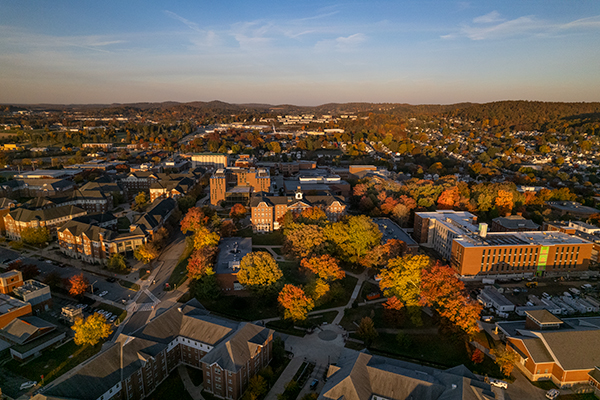
Campus Setting
RuralFacilities
First and second year medical students will attend most lectures on the IUP campus inside Jane Leonard Hall. The fourth floor will accommodate two 120- seat lecture halls, as well as several small group student study rooms for private or group study and for use in case-based, team-based and other small group-based learning activities. Also included in Leonard Hall is the faculty office suite of the COM Biomedical Science Department and meeting spaces, an additional small classroom, flex study space and a testing accommodations center.
IUPCOM will use coordinated simulation and standardized patient facilities across the IUP campus inside McElhaney Hall, Johnson Hall, and Putt Hall to support early clinical skills training through hands-on learning.
Standardized patient instruction will be centered in McElhaney Hall, which features nine fully equipped examination rooms that mirror outpatient clinical settings. These spaces support practice in history taking, physical exams, communication skills, and osteopathic manipulative medicine, with built-n recording technology and areas for faculty observation, debriefing, and assessment.
Simulation-based training will be provided in Johnson Hall and Putt Hall. Johnson Hall offers high-fidelity adult simulation rooms with centralized faculty control and observation, along with classrooms and skills labs for low-fidelity procedural training. Putt Hall expands these offerings with high-fidelity adult, OB/GYN, neonatal, pediatric, and home-care simulation suites, low-fidelity pediatric labs, virtual-reality simulation, and multiple teaching and debriefing spaces.
Together, these facilities create a comprehensive and scalable environment that supports standardized patient encounters, low- and high-fidelity simulation, interprofessional learning, and structured feedback aligned with early clinical education goals.
Student Residence Options
At the center of the IUPCOM mission is a student-centered approach to achieve academic success and physical well-being.
IUPCOM students can utilize learning support specialist and IUP Navigators who will help direct a student who may have a challenge finding the right department to contact regarding a personal or academic issue.
Students will be assigned an academic faculty advisor upon matriculation with protected time for advising. Each student will meet with their advisor at least once per semester in the first year, and then annually until graduation. Any student who fails an examination must contact the professor and their academic advisor immediately. Learning specialists will be available for additional academic support. Mental health counseling may be recommended to augment academic support.
Mental health services will include support throughout all four years of medical education. This will include individual counseling and psychotherapy, crisis intervention, emergency mental health support and workshops managing stress. Students will have access to 24/7 emergency mental health support.
Physical health services include access to the Indiana University of Pennsylvania medical resources and access to area preventive and acute physical health services during third and fourth year clinical education.
Academic counseling services will provide the students with support with coursework, examination preparation (including COMLEX-USA/COMAT/COMSAE), and reasonable learning accommodations and time management.
Career counseling will be available with specialty-specific advising from faculty and/or alumni with expertise in each field of interest. This counseling also includes workshops and seminars on specialty exploration, the residency match process, CV preparation, and interviewing skills.
COM Accreditation Status The Commission on Osteopathic College Accreditation (COCA) - Preaccreditation
University Affiliation(s) Middle States Commission on Higher Education (MSCHE); Indiana University of Pennsylvania
Overview
Public Institution
Non-Profit
Middle States Commission on Higher Education (MSCHE); Indiana University of Pennsylvania
Institutional Affiliation
2026
Year Founded
Rural
Campus Setting
Campus Contact
Indiana University of Pennsylvania College of Osteopathic Medicine - IUPCOM
Address
(724) 357-2100
Phone
Website
Admissions Office
Curricular Offerings
The first two years of the Doctor of Osteopathic Medicine curriculum focus on building a strong foundation in biomedical sciences, clinical systems, and osteopathic principles while progressively developing clinical skills. From the beginning of training, students engage in structured simulated patient and standardized patient experiences designed to support early application of medical knowledge in a safe, supportive learning environment. These encounters allow students to practice history taking, physical examination, osteopathic manipulative techniques, and patient communication while receiving formative feedback from faculty and trained standardized patients.
Low- and high-fidelity simulation of patient care encounters is integrated throughout the pre-clinical curriculum within the first two years of medical school to reinforce learning and promote confidence prior to clinical rotations. Low-fidelity simulations emphasize deliberate practice of foundational skills, while high-fidelity experiences introduce increased realism, including physiological responses and interprofessional collaboration. Together, these experiences help students refine clinical reasoning, communication, and professionalism while preparing them for the transition to clinical training in later years.
Unique to IUPCOM are early clinical experiences that start in the fall of Year 1 and continue through until the end of Year 2 in which students work with resident and attending physicians and follow patients through the stages of care, putting faces and cases to the content learned in the classroom, and starting the development of clinical skills in real-world settings earlier than most other medical school programs.
Clerkship/Clinical Rotations
The third year of the curriculum marks the transition to full-time clinical education, completing all core and required rotations, and beginning selective and elective rotations. Students participate in clinical rotations across major medical disciplines, where they apply foundational science and clinical skills in supervised, real-world patient care settings. Clinical experiences are reinforced through continued use of simulated patient and standardized patient encounters, allowing learners to refine diagnostic reasoning, procedural skills, osteopathic manipulative medicine, and patient communication in a structured and supportive environment. Simulation-based activities support preparedness for clinical responsibilities, promote patient safety, and provide opportunities for feedback and reflection alongside faculty.
Year 3 begins with Clinical Colloquium I and ends with Clinical Colloquium II. These are gateway courses through which all students must pass in order to demonstrate competency and safety of patient care in order to be allowed to pass onto the next phase of training, each progression marking a transition to a higher level of responsibility and thus knowledge needed to succeed. Interprofessional educational experiences and assessments will be a core component of this course.
Once students have passed Clinical Colloquium I and obtained a passing score on COMLEX-USA Level 1, they begin clinical rotations, completing the core and required rotations (in an order determined by a lottery system) at a clinical campus of IUPCOM. These rotations are 4-weeks in duration and are located in rural and medical underserved areas in Pennsylvania. Once the required and core rotations are complete, students then begin to take selective and elective rotations.
Concurrent with their rotations, all students will also be taking longitudinal courses that run parallel to their rotations, including Consolidation of Learning, Foundations of OPP, Psychiatry and Behavioral Science, and Research Project. While the time devoted to these courses is much lower than that of the rotations, these courses ensure that core principles are revisited and incrementally developed longitudinally rather than learned and not reinforced. This method has been shown to improve retention and also make preparation for board examinations less arduous.
The fourth year focuses on advanced clinical training and individualized career preparation, completing selective and elective rotations. Students complete advanced rotations, electives, and sub-internship experiences that prepare them for residency training and independent practice. Simulation and standardized patient experiences remain integrated to support higher-level clinical decision-making, interprofessional collaboration, and management of complex or acute clinical scenarios.
Fourth-year experiences emphasize readiness for residency through strengthening clinical competence, professionalism, and communication skills, while allowing students to tailor their education toward specific career goals. Once a student has passed all core and required rotations, and passed Clinical ColloquiumII, they are allowed to progress into Year 4 in July of their last year. This year is composed of selective and elective rotations, as well as the same longitudinal courses from year 3, continued in scope and rigor into Year 4. Year 4 ends with Clinical Colloquium III, where students will be assessed against the Entrustable Professional Activities for entering residency and complete an interprofessional education capstone experience.
Premedical Coursework
Courses below are shown as either Recommended or Required and, when applicable, include the number of semester hours needed.
Anatomy
Recommended3 semester hours
Biochemistry
Recommended3 semester hours
Biology/Zoology
Required With Lab8 semester hours
Cell/Molecular Biology
RecommendedChemistry (Inorganic)
Required With Lab8 semester hours
Chemistry (Organic)
Required With Lab8 semester hours
Genetics
RecommendedImmunology
RecommendedMicrobiology
RecommendedPhysics
Required8 semester hours
Physiology
RecommendedBehavioral Sciences
Recommended6 semester hours
College English
Required6 semester hours
Math/Statistics
Recommended4 semester hours
Additional Non-Science Courses
Medical Terminology
Recommended
Admissions
Qualified applicants through the AACOMAS application process will be selected for an interview with the admissions team. Interviews will be conducted in person (virtual interviews can be arranged due to extenuating circumstances) and be a 2-on-1 format. (Two faculty and one applicant). Following the interview, applicant decisions will be sent via standard mail or visible on a student portal.
Selected applicants will be required to submit an admissions deposit to reserve their seat in the class.
Interview Options: Option to interview virtually or in-person
Physician letter required? N/A; no physician letter required
Virtual Shadowing Options? Only in-person shadowing accepted
Accepts online coursework to fulfill prerequisite requirements? Yes, but only in certain circumstances
Not accepted for required core science courses.Accepts prerequisite coursework pass/fail grades? No
Will your institution waive MCAT exam requirements? No
Accepts online lab coursework? Yes, but only in certain circumstances
Only accepted if online was only option for student learner.Primary Application Service: AACOMAS
Earliest Application Submission Date: May 4, 2026
Primary Application Deadline: April 1, 2027
Submission Timing for Best Consideration
First Year Class Matriculant's Selection Factors
International Students Accepted? Accepts International Students
International Students must provide proof of funds for all 4-years of medical education prior to an admissions decision.Are Deferred Action for Childhood Arrival (DACA) students considered for admissions? No
Application Interview Format: Traditional
The IUPCOM admissions staff strongly prefers that qualified candidates interview in person; however, accommodations will be made for students who are unable to travel to the Indiana, PA campus.
Early Decision Program (EDP)
EDP Offered? Yes
Admissions EDP Available For
In-State
EDP Application Due Date
August 1, 2026
EDP Supplemental Materials Due
October 1, 2026
EDP Applicants Notified
November 1, 2026
EDP Applications Submitted To AACOMAS
Supplemental Application
Supplemental Application Required? No
Supplemental Application Sent To: All Applicants
Supplemental Application Fee Refundable? No
Supplemental Application Fee Waiver Available? No
Orientation/Start Date for First Year Students
July 26, 2027
Deferred Entrance Requests Considered? Yes
Acceptance/deposit deadlines conform to the AACOMAS Traffic Guidelines Schedule? Yes
Oldest MCAT Considered: July 1, 2024
Latest MCAT Score Accepted: January 31, 2027
Accepted Sources for Letters of Recommendation
- AACOMAS
- Interfolio
Main Admissions Contact
(724) 357-6219
Phone
Tuition, Fees & Financial Aid
2026-2027 Academic Year
In-State Tuition
$43,200
Out-of-State Tuition
$65,000
Annual Fees
In-State Resident Fees
$1,570
Out-of-State Resident Fees
$1,720
Health Insurance Fee
TBD
Tuition Fees Include
Estimates, Deposits, and More
Acceptance Deposit
$1,000 for in-state and $2,000 for out-of-state students
Additional Deposit
$0
Deposit Applied to Tuition? Yes
Deposit Refundable? No
Financial Aid Website https://www.iup.edu/financialaid/index.html
Scholarships Offered? Yes