
Nutrition at Colleges of Osteopathic Medicine
Nutrition Education at Colleges of Osteopathic Medicine
Since 1892, osteopathic medical education has remained grounded by a simple but powerful principle: the job of the physician is to help the patient find health, not merely to manage disease.
Comprehensive nutrition education is in line with the core tenets of osteopathic medicine, which emphasize the interrelationships between the mind, body and human spirit.

Faculty, staff and students at DMUCOM gather in the Groben Wellness Lab, a fusion of home health care simulation space and teaching kitchen, to prepare simple, nutrient-dense meals and learn how macronutrients support health, wellness and disease prevention.
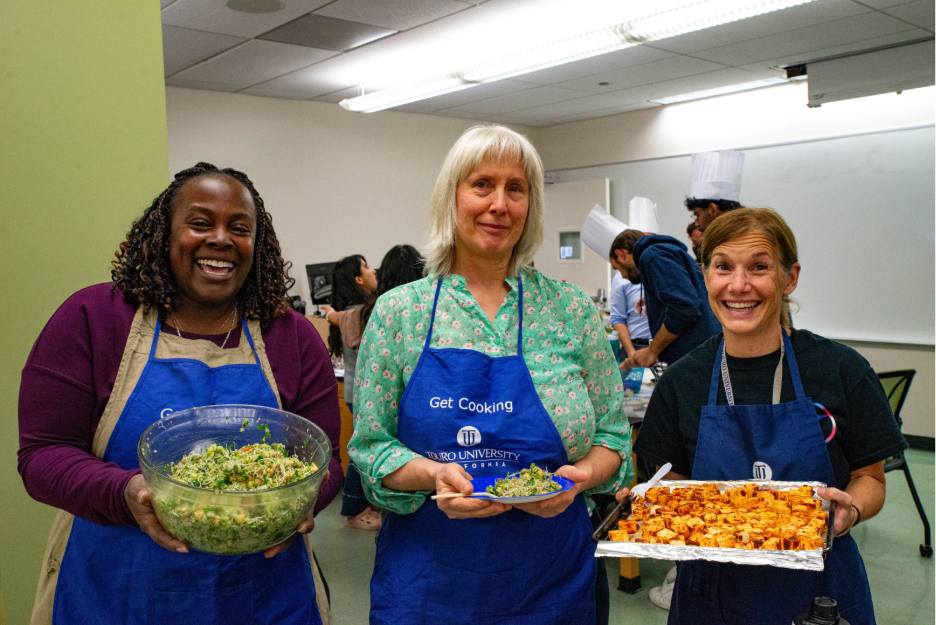 TUCOM California Professors (left to right) Drs. Grace Marie Jones, Gloria J. Klapstein, and Traci Stevenson show off healthy food options during a nutrition course.
Nutrition education is expanding in the medical curricula across COMs to ensure future physicians have the knowledge and practical skills to treat and prevent chronic diseases through evidence-based dietary habits. Nutrition education initiatives include culinary medicine courses, training to apply nutrition science directly to patient care, and an overall increase in required nutrition education hours at several schools.
According to an August 2025 survey by the American Association of Medical Colleges (AAMC), 100% of responding U.S. and Canadian medical schools reported nutrition was included in their required curricula—up from 89% five years ago.

TUCOM Montana osteopathic medical students learn hands-on cooking methods during their culinary medicine program.
Osteopathic Commitment
This osteopathic commitment to nutrition education is further reflected in COM accreditation standards, COMLEX-USA competencies, and other AACOM and medical education programs and resources.
- AACOM Research Grants
Nutrition, lifestyle medicine, and education research may be supported through AACOM’s grant mechanisms. - COCA 2026 COM New and Developing Accreditation Standards
These standards require COMs to ensure that comprehensive evidence-based nutrition education is integrated across pre-clinical and clinical curricula. - Fundamental Osteopathic Medical Competency Domains 2026 (FOMCD 2026)
An increased focus on nutrition and diet in patient care was incorporated into the COMLEX-USA guidelines to reflect the evolving nature of the profession. Click here for a summary of nutrition references. - Nutrition in Medical Education Curricula: A Recipe for Increased Competency-Based Teaching and Learning
AAMC Report released August 2025. Includes a survey of medical schools on nutrition education. - Food Is Medicine Coalition Letter: Medically Tailored Meals (MTMs)
AACOM signatory letter urging inclusion of MTMs in upcoming legislative action signed in January 2025.