
National Hispanic Heritage Month: Leadership as Stewardship
Published September 30, 2026
Inside OME
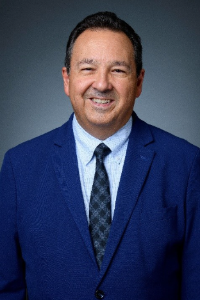
By David E. Garza, DO, MS, MEdL, FACOFP, dist., FAAFP, Chair of Primary Care, Assistant Professor of Family Medicine, University of the Incarnate Word School of Osteopathic Medicine and Member of the AOA Board of Trustees
National Hispanic Heritage Month gives us a chance to recognize the contributions Hispanic Americans have made to our country. In osteopathic medical education, I believe it should also give us a reason to think about the students we are educating, the communities they will serve and the kind of profession we want to build for the future.
For me, this is personal.
I grew up in Laredo, Texas, along the U.S.-Mexico border. Hispanic culture was not something we stopped to think much about. It was simply part of who we were. It was our families, our language, our traditions, our food and our sense of community.
It also shaped the way I came to understand people.
Long before I became a physician, I knew that when something happened to one member of a family, it often affected everyone. Decisions were rarely made in isolation. Family mattered. Relationships mattered. Trust mattered.
Those lessons stayed with me when I became a family physician.
I spent 25 years in practice, and one thing became very clear during that time: patients do not come to us as diagnoses. They come to us as people. They bring their families, beliefs, fears, responsibilities, financial concerns and life experiences with them.
That is one reason osteopathic medicine has always made sense to me. We are taught to look at the whole person. Culture is part of that whole person.
As medical educators, we have an obligation to help our students understand that.
Hispanic Heritage Month is also an opportunity to talk about representation in medicine. Representation matters. Students notice who is standing in front of the classroom. They notice who their physicians are, who their faculty members are and who holds leadership positions.
For a student who may be the first person in the family to attend medical school, seeing someone with a similar background can make a difference.
But I have come to believe that belonging matters just as much as representation.
I have had the privilege of working with many first-generation medical students during my career. They are often bright, highly motivated and fully capable of succeeding, but they may not have anyone in their family who understands medical school or the profession they are entering.
There are many unwritten rules in medicine.
How do you find a mentor? How do you approach a faculty member? How do you build a CV? How do you decide on a specialty? How do you know when an opportunity is worth pursuing? How do you picture yourself someday becoming a program director, department chair, dean or leader in organized medicine?
Some students have people around them who can answer those questions. Others do not.
That is where mentorship becomes so important.
Sometimes a student does not need another formal program. Sometimes that student simply needs someone to take an interest, offer encouragement, open a door or say, “You should consider this. I think you would be good at it.”
Those conversations can change careers.
As we recognize Hispanic Heritage Month, I hope we also think beyond celebrating accomplishments of the past. We should be asking what we can do now.
Are we encouraging Hispanic students early enough to see medicine as a realistic possibility?
Once they arrive in medical school, are we helping them not only succeed, but also see themselves as future leaders?
Are we making sure that students from every background feel that they belong in our schools and in our profession?
And are we preparing every osteopathic medical student, Hispanic or not, to care for patients whose backgrounds and life experiences may be very different from their own?
These questions matter because the communities our graduates will serve are changing.
At this point in my career, I think more and more about leadership as stewardship. We are given a period of time to help shape our schools, our profession and the people who will follow us. Then someone else takes our place.
Our responsibility is to leave things a little better than we found them.
For me, Hispanic Heritage Month is partly about looking back with pride. I am grateful for where I came from and for the people and experiences that shaped me.
But it is also about looking forward.
If osteopathic medical education continues to identify talented students from every community, gives them a genuine sense of belonging and provides the mentorship and opportunities they need to succeed, we will strengthen more than our medical schools.
We will strengthen the profession.
And, ultimately, we will be better prepared to care for the people and communities who are counting on us.