
Hands-On Care: Inside the Inpatient OMT Pilot at Johns Hopkins Bayview Medical Center
Published November 09, 2026
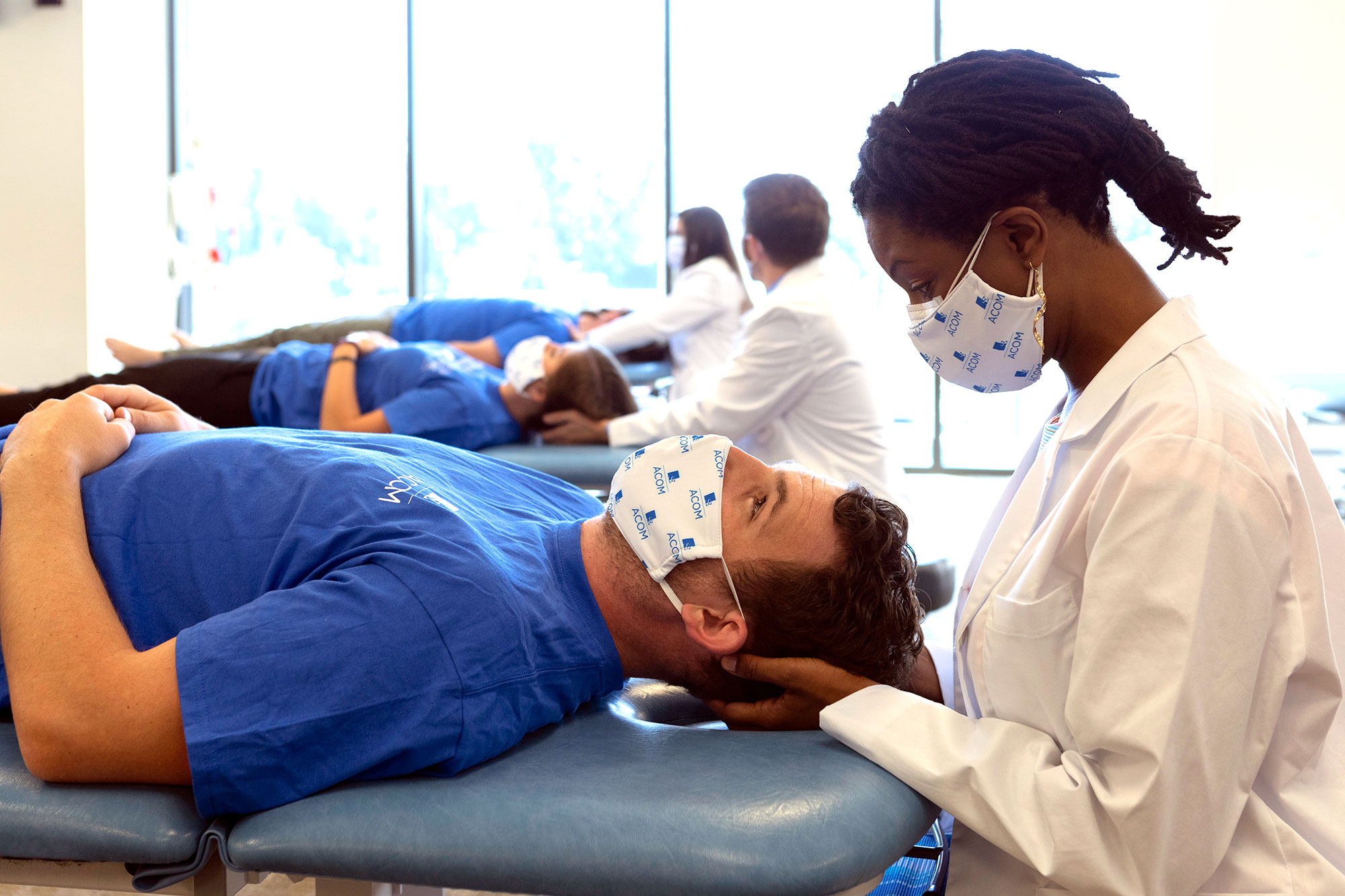
Physician examining a patient to administer osteopathic manipulative treatment
At Johns Hopkins Bayview Medical Center (JHBMC) in Baltimore, Maryland, hospitalists caring for patients with chronic back pain have a new option to offer alongside medication: 15 minutes of osteopathic manipulative treatment (OMT), delivered at the bedside by a doctor of osteopathic medicine (DO).
Osteopathic physicians learn to diagnose and treat with their hands from their first year of medical school, and Dimitri Tito, DO, an assistant professor in the Division of Hospital Medicine at Johns Hopkins Bayview, Johns Hopkins School of Medicine Advisor and co-director of the Global Health Pathway, has long known the value and effectiveness of OMT. He is bringing this respected practice to inpatient settings alongside multidisciplinary care teams.
Dr. Tito created the OMT pilot program at JHBMC with the hopes of making OMT a permanent resource across the health system.
At the Bedside
For a patient with chronic low back pain, relief usually requires a prescription. Although medication, such as opioids, can dull pain, it also carries the risk of addiction, overdose and even death that worries many patients and physicians.
The pilot offers another path.
Dr. Tito’s pilot brings together a small team of volunteer DOs, all internal medicine physicians who completed their residencies at sites with osteopathic recognition, to work alongside hospitalists to identify and treat patients living with pain.
Each patient receives education on OMT, a structural exam and the delivery of OMT to ease pain, relax tight muscles and improve movement and physical function without adding medication. To initiate the process, a member of the osteopathic care team checks in with the attending hospitalist to find patients who are interested in pain management for their chronic low back pain. Those who show interest are screened, give informed consent and are paired with an OMT physician.
Before leaving, the physician provides an informational brochure explaining OMT, with exercises the patient can continue after discharge. At two points, an hour after OMT and again the next day, the team checks in to gather information on how the patient feels.
Through the current pilot, which seeks to reach 50 patient participants, Dr. Tito will collect and analyze data from the post-OMT patient surveys and publish his findings to the Journal of Osteopathic Medicine after review by an institutional review board. He hopes this initiative will help solidify OMT's role at Johns Hopkins and allow others to similarly expand opportunities for OMT in their own health systems.
Laying the Groundwork
Setting up this pilot program was no easy feat. Dr. Tito began this process nearly three years ago by looking for like-minded physicians. He reached out to every DO he could identify across Johns Hopkins, in every specialty, to help form an Osteopathic Task Force. Physicians answered, including residents in physical medicine and rehabilitation, orthopedic surgery and sports medicine.
The task force convened and set a practical goal: build the clinical privileges, credentials and care pathway needed to offer OMT at the bedside.
Accomplishing this goal required institutional buy-in from both clinical colleagues and leadership. Many of Tito's MD colleagues were curious about OMT but unfamiliar with it. He came to those conversations with evidence on OMT's effect on pain relief and ability to reduce opioid use. He pointed to peer institutions, including Cleveland Clinic and UC San Diego, where patients can already receive OMT.
He then took the case to the director of the Division of Hospital Medicine, hospital's vice president of medical affairs and to nursing leadership, helping them to understand OMT's value to patients. All approved the pilot, and Dr. Tito was able to secure clinical privileges and credentials at both Johns Hopkins Bayview and the main Hopkins campus.
Already, Dr. Tito sees curiosity and excitement building about this work. "Hospitalists now contact the osteopathic care team on their own to request OMT for their patients," Dr. Tito excitedly shared.
With the promising start and forthcoming analysis into the success of the pilot, Dr. Tito said the conversation with leadership has shifted. "Now, the conversation with leadership isn't 'Is this possible?' It's 'How can we expand this?'" he explained.
To Dr. Tito, this pilot is also an opportunity to inspire osteopathic excellence while bettering patient care. Clinical settings that offer OMT give physicians a place to keep their OMT skills sharp, provide osteopathic students and residents role models to follow and allow patients to access personalized medicine. He sees the pilot as a foundation for future osteopathic recognition in the hospital's internal medicine residency.
Dr. Tito describes the value of choosing a residency program with osteopathic recognition
“Training in a residency program with Osteopathic Recognition ensured my OMT skills didn't stop at medical school graduation; they deepened at the bedside. I want to build that same pathway, so the next generation of trainees has ... the mentorship and institutional backing to deliver whole-person care at the highest academic level,” Dr. Tito explained.
A Broader Shift
For health systems, the appeal of OMT is practical and evidence-based. In 2013, a 455-patient randomized trial found that patients with chronic low back pain who received OMT were more likely than those who received a sham treatment to report substantial pain relief and be satisfied with their back care. They also used prescription drugs for back pain less often over a 12-week period. A 2014 meta-analysis of 15 randomized trials found clinically relevant reductions in pain and improvements in function from OMT for chronic and acute nonspecific low back pain.
National guidance points the same way. The 2022 CDC Clinical Practice Guideline for Prescribing Opioids for Pain says nonopioid therapies are preferred for subacute and chronic pain. The American College of Physicians recommends that patients with low back pain start with nondrug treatment, listing spinal manipulation among the therapy options.
Yet OMT remains underused. A recent study published in the Journal of Osteopathic Medicine found that only 1.4 percent of nearly 99,000 patients on long-term opioid therapy for painful conditions meeting criteria for OMT eligibility received it.
Initiating a Pilot Program
For DOs and colleges of osteopathic medicine hoping to build similar programs, Dr. Tito offered four lessons:
- Start small. A focused pilot targeting a single condition, one hospital and a set number of patients is easier to approve and to measure.
- Align with hospital priorities and frame OMT around goals leaders already track, such as reducing opioid use and raising patient satisfaction.
- Partner widely. Bring in patient safety, quality and nursing teams early for input and consensus building.
- Collect rigorous data and present the whole picture to leadership.
"Osteopathic medicine has a respected home at top academic hospitals. Inpatient OMT is a way for DOs and MDs to come together around what we all want, which is helping our patients heal," shared Dr. Tito.
Thanks to Dr. Tito's work, at JHBMC, the question is no longer whether OMT belongs at the bedside. It is how many more bedsides it can reach.
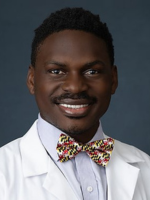 Dimitri Tito, DO, is an Assistant Professor at the Johns Hopkins University School of Medicine and a Major in the U.S. Army. He completed his undergraduate degree in Biomedical Engineering at the University of Maryland, College Park. He then attended medical school at the West Virginia School of Osteopathic Medicine and performed an academic medicine Internal Medicine residency at Western Michigan University Homer Stryker MD School of Medicine and did additional training in Health Policy. Recognized for his healthcare leadership and impact, he has been named to the National Minority Quality Forum as one of the 40 Under 40 Leaders in Minority Health. Dr. Tito was also named to the Black Health Connect 40 Under 40 Class of 2026, highlighting emerging leaders advancing healthcare delivery and community impact. Dr. Tito's research and expertise center on non-communicable disease screenings in low-income countries and health policy. He has actively led efforts to establish and implement community-based programs that deliver essential medical care and health education to marginalized populations in resource-limited settings.