
More Than Representation: Building the Future of Indigenous Healthcare Through Osteopathic Medical Education
Published November 23, 2026
Inside OME
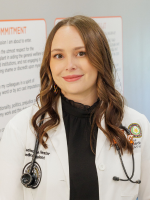
Mackenzee Thompson, DO, is a member of the Choctaw Nation and family medicine resident in Oklahoma, who is dedicated to improving health outcomes for Native Americans.
Herbal remedies depicted in Native American artwork, passed on my way to a cardiology exam. Bright Oklahoma State University orange against pieces of tribal beadwork. A wall of honeysuckle pots, each painted by a member of our inaugural class under the guidance of a Cherokee artist, to honor the body donors who made our anatomy lab possible. A Wilma P. Mankiller Barbie by Mattel, standing proudly as a reminder of the strength and influence of a female tribal leader. These are snapshots of what I saw daily while attending the first tribally-affiliated medical school in the U.S.
As a member of the inaugural class at Oklahoma State University College of Osteopathic Medicine at the Cherokee Nation, I was immersed in an educational experience that not only taught me how to be an osteopathic physician but also provided an opportunity to reconnect with my Choctaw heritage. It was a place where my heritage was not separate from my medical training but celebrated as part of it.
My journey toward becoming an Indigenous physician began long before I walked across the stage at my white coat ceremony. Perhaps it started in my grandmother’s home, as I listened to her stories of growing up near the Little River on the Choctaw Nation reservation. Or perhaps it began when I was a little girl myself, learning about science and the value of a life devoted to serving others. It was shaped by chronic disease in my family and the barriers to healthcare we in our rural communities. It was sustained by my family’s unwavering support through the ups and downs of medical training. Although much of my family’s Choctaw culture was tragically lost through the generations, the values and perspective I bring to my medical career are undeniably shaped by my Native American roots.
Osteopathic medicine resonated with my values as a young physician and aligned closely with what I learned about Native American culture. Native American culture values community, nature, and creation and understands that health is much more than the absence of disease. The effects of historical trauma can extend across generations, shaping the health and well-being of Native communities today. I also learned that trust is essential to the therapeutic relationship. My connection to the communities I serve deepens my appreciation for the cultural, familial and practical factors shaping my patients’ health and what it means to them.
My education became tangible during clinical training. As a medical student, I completed many of my core rotations in tribal healthcare settings, where I learned to care for patients and understand the systems surrounding their care, including referral processes and reimbursement structures. I refined these skills as a resident in the Cherokee Nation Family Medicine Residency Program. I saw how geography and healthcare infrastructure shape what is possible for patients. A medically appropriate treatment plan must also be realistic for someone navigating long travel distances, limited specialty access or other barriers common in rural communities.
In a society where Native Americans carry the weight of negative biases and statistics, I had the privilege of attending a school where my culture was celebrated. Cultural humility was not simply taught; it was expected. I was surrounded by Native American medical students, physicians, researchers, leaders and mentors. Helping Native students enter and thrive in medical school was a priority. I have realized that addressing Indigenous health disparities and rural physician shortages requires more than recruiting physicians to underserved areas. It requires partnerships between medical schools, Tribal Nations and healthcare systems; meaningful clinical learning opportunities in tribal and rural settings; and support for Native students throughout the path to medicine. It involves recruiting students from those communities and fostering a pipeline for them to return and serve. Mentorship is a valuable tool for allowing students to thrive. My access to mentorship from other Native American physicians ignited a passion of giving back to other students behind me in the pipeline. I have no doubt that the osteopathic medical educational environment in which I learned changed the trajectory of my future in medicine.
Native American Heritage Month is an opportunity to celebrate Indigenous history, resilience and contributions. It is also a reminder that this work must continue throughout the year. Medical education can do more than increase representation: It can prepare physicians who understand the communities they serve, strengthen the pipeline for future Native physicians and build lasting partnerships that improve access to care. I look forward to continuing my career in tribal healthcare, with the hope of making a meaningful impact within my state and beyond.