
Students Present Summit Research, Explore Neurology Conference, Celebrate Graduation and More
Published June 03, 2026
Campus Roundup Inside OME
Innovation and Collaboration Lead the Second Annual Mountain West Research Summit in Provo
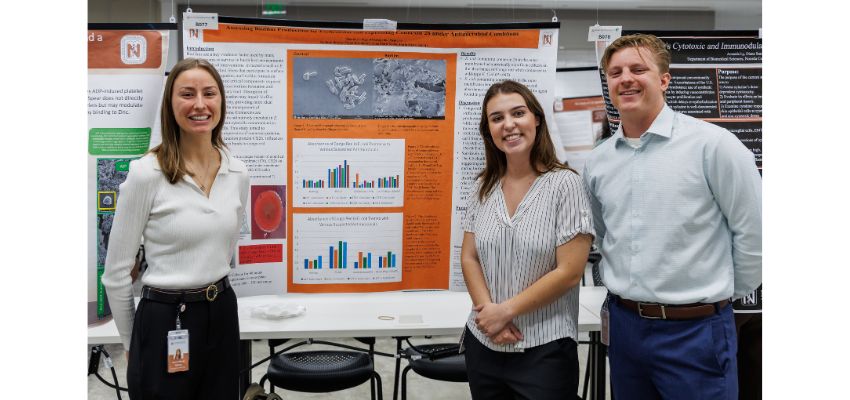 The Second Annual Mountain West Research Summit, hosted by Noorda College of Osteopathic Medicine (Noorda-COM) in Provo, Utah, brought together hundreds of medical and healthcare students from regional institutions. Held May 7-8, 2026, the two-day event provided a forum for students to present research across biomedical sciences, clinical research and case studies. The summit concluded with an awards ceremony, highlighting local scientific discoveries aimed at improving community healthcare and patient care.
View more photos from the Second Annual Mountain West Research Summit on Noorda-COM’s Instagram.
VCOM-Louisiana Students Explore Neurology at American Academy of Neurology Annual Meeting
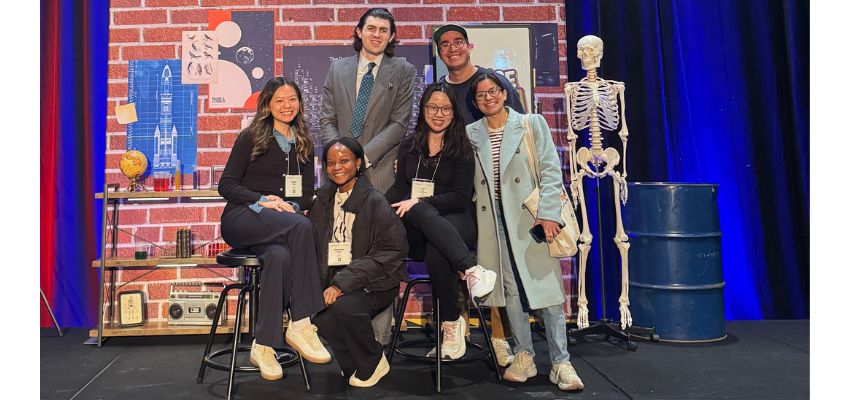 Five Edward Via College of Osteopathic Medicine Louisiana Campus (VCOM-Louisiana) Class of 2027 students—Michelle Wong, Lydia Ta, Erin Vasquez, Ibukunoluwa Falana and Anthony Elliott—represented VCOM-Louisiana at the American Academy of Neurology Annual Meeting in Chicago, Illinois.
During the conference, students explored emerging neurological research, connected with fellow students, residents and program directors from around the world and participated in interactive experiences, including a portable MRI brain scan, a brain health 5K and even meeting Bill Nye.
View more photos from the American Academy of Neurology Annual Meeting on VCOM-Louisiana’s Facebook.
Twins Graduating from UNE Carry on Lifelong Journey Together Through Medical School into Residency
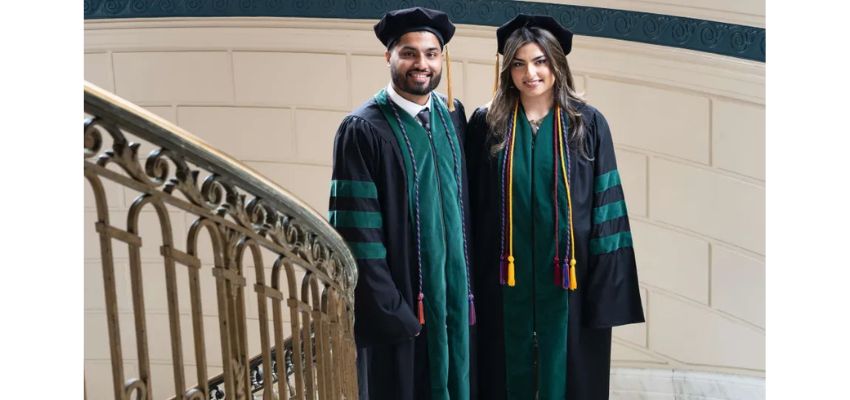 When Hafsa Sadiq (right) and Hammad Sadiq (left) walked across the stage at the University of New England College of Osteopathic Medicine (UNE COM) commencement ceremony, they carried more than degrees: They carried with them the story of a family that crossed continents in search of opportunity, of siblings who have spent nearly every chapter of life side by side and of two first-generation students who found in medicine both a calling and a way to give back.
The fraternal twins, born in Pakistan, spent part of their childhood in Saudi Arabia and ultimately immigrated to the United States with their family in 2010. They settled in Massachusetts, where they navigated high school, college and eventually the demanding path to medical school together.
Read more about Hafsa and Hammad’s lifelong journey together through medical school into residency.
The MSU College of Osteopathic Medicine Hosts Fourth Annual Research Day
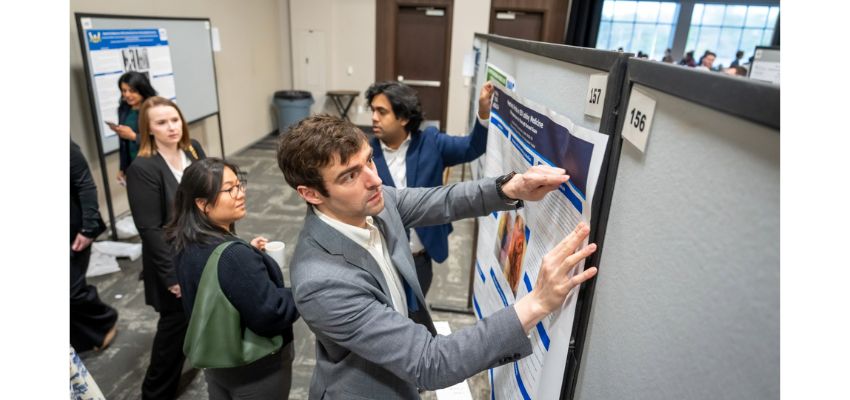 “The principles of osteopathic medicine are grounded in science,” said Joyce deJong, DO, dean of the Michigan State University College of Osteopathic Medicine (MSUCOM). “It’s strengthened by the rigorous research of those of you in this room and researchers throughout the world. The work you’re doing here is advancing and ensuring the future of our profession.”
Hosted with support from the Graduate Medical Education Alliance and Research, Innovation and Scholarly Engagement at MSUCOM, the annual Research Day highlighted the ongoing research efforts, interdisciplinary partnerships and scholarly work taking place throughout MSU’s osteopathic medicine community to improve health outcomes.
Read more about MSUCOM’s Fourth Annual Research Day.
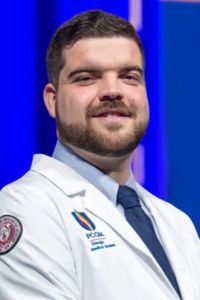 Rethinking Routine Blood Draws in Pediatric Emergency Behavioral Health
In pediatric emergency departments, blood draws are often used as part of routine medical evaluation in behavioral health assessments. But new research from Dylan Hurley, MPH, MAB, OMS II, a medical student at Philadelphia College of Osteopathic Medicine Georgia Campus (PCOM Georgia), suggests they rarely change patient care.
In a review of 209 cases involving children with autism spectrum disorder presenting with behavioral health concerns, clinically significant findings—those that altered treatment—occurred in less than one percent of cases. The study, “Medically Unnecessary Venipuncture in Autism Spectrum Disorder Behavior Assessments,” examines whether routine laboratory testing meaningfully contributes to clinical decision-making. It was published in the February 2026 edition of Pediatric Emergency Care.
Read more about Dylan’s research on routine blood draws in pediatric emergency behavioral health assessments.