
The Early Days of Osteopathic Medicine and the Women Who Shaped It
Published September 16, 2026
Inside OME
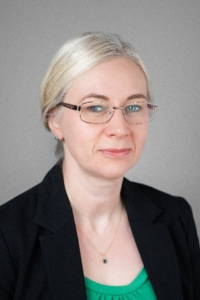
By Katarzyna Pomianowski, MD, MPH, Arkansas College of Osteopathic Medicine
During Women in Medicine Month, it is important to mention the female leaders of the early osteopathic history. When Andrew Taylor Still opened the American School of Osteopathy in Kirksville, Missouri, in 1892, six women were among the school’s first class of 21 students. At a time when women faced substantial barriers to entering the medical profession, five of those women graduated as members of the school’s inaugural class in 1894.
Dr. Still is remembered as the founder of osteopathy and the originator of its central philosophy. Less frequently recognized, however, are the women who helped transform his ideas into an organized profession. Among these early leaders were Jeanette “Nettie” Bolles, DO, Edythe Florence Ashmore, DO, and Louisa Burns, DO. Through their work, they developed educational institutions, strengthened clinical teaching and advanced scientific inquiry.
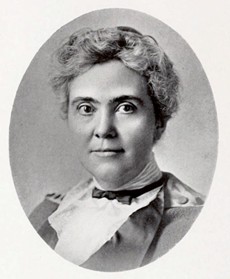
Jeanette “Nettie” Bolles, DO, was one of five women who graduated with the American School of Osteopathy’s first class in 1894. She began teaching anatomy while still completing her studies and became the first woman to teach anatomy at an osteopathic medical school. She also served as the first editor and publisher of the Journal of Osteopathy. In 1897, Bolles became the founding president of the Western Institute of Osteopathy and the first vice president of the American Association for the Advancement of Osteopathy, the organization that later became the American Osteopathic Association.
For today’s osteopathic medical educators, perhaps her most striking legacy is her connection to AACOM itself. Bolles served as the founding president of the Associated Colleges of Osteopathy, the organization that eventually became the American Association of Colleges of Osteopathic Medicine. The AOA honored her with its Distinguished Service Award in 1925. Her career reminds us that a medical philosophy cannot endure without proper educational structures. The rising osteopathic medical field needed schools, faculty members, publications, professional organizations and educational standards. Bolles helped build those structures, enabling the young profession to grow and endure.
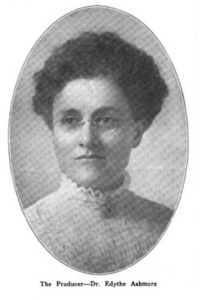
Edythe Florence Ashmore, DO (1872–1953), was more than an early teacher of osteopathic manipulation. After graduating from the Dr. S.S. Still College of Osteopathy in Des Moines in 1901, she became active in clinical practice and osteopathic education. From 1904 through 1909, Ashmore collected more than 1,200 clinical case reports from osteopathic physicians and published them as supplements to the journal now known as the Journal of Osteopathic Medicine. This work helped document and organize the profession’s clinical experience. She also served as a vice president of the American Osteopathic Association in 1906 and again in 1911. Ashmore later directed the Department of Osteopathic Techniques at the American School of Osteopathy and published Osteopathic Mechanics in 1915.
Ashmore confronted an important challenge facing the young profession: the need to make osteopathic practice systematic and teachable. How could osteopathic principles be translated into clinical techniques and taught consistently to future physicians? She encouraged students not simply to imitate A.T. Still’s techniques but to understand the principles underlying them, exercise independent clinical judgment, and continue refining their knowledge and skills. More than a century later, these remain essential goals of medical education.
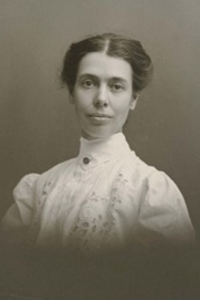
Louisa Burns, DO, represents a third essential element in the profession’s development: research. Trained as an osteopathic physician and investigator, Burns devoted much of her career to examining the physiological concepts underlying osteopathic medicine. She directed the first osteopathic research institute and published Studies in the Osteopathic Sciences. Burns’s work remains especially meaningful today. Medicine advances when clinicians do more than simply accept a treatment because it appears promising. They ask whether its effects can be observed and measured, an approach that Burns helped establish as an essential component of osteopathic medicine. Her influence can still be seen at A.T. Still University, where the modern A.T. Still Research Institute continues the scientific investigation of osteopathic principles that characterized her work.
Women in Medicine Month offers a great opportunity to recognize the women who helped build osteopathic medicine during its formative years. Bolles created institutions through which the profession could be taught and organized. Ashmore translated osteopathic principles into systematic, teachable clinical practice. Burns brought those principles into the laboratory and subjected them to scientific investigation. Together, their work strengthened three foundations on which osteopathic medical education continues to depend: education, clinical practice and research. Their stories remind us that women did not merely join the history of osteopathic medicine; they helped to write it.
Photo credits:
Jenette H. Bolles, from Representative Women of Colorado, 1914. Author unknown. Public domain; via Wikimedia Commons.
Edythe F. Ashmore, DO. Historical portrait originally published in The Osteopathic Physician 29, no. 2 (February 1916): 1; digital image reproduced by The DO, American Osteopathic Association.
Louisa Burns, DO, ScD, 1907. Photograph by Farnham C. Dando. Public domain; via Wikimedia Commons.