
When the Doctor Never Came: Native American Stories of Healing
Published November 04, 2026
Inside OME
By Katarzyna Pomianowski, MD, MPH, FAAFP
Arkansas College of Osteopathic Medicine
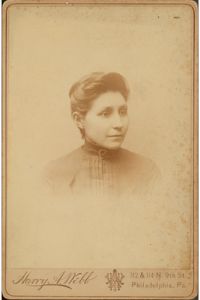
As a young child on the Omaha Reservation in Nebraska, Susan La Flesche Picotte (pictured left) watched a sick Omaha woman wait for a physician who never came. The woman died. La Flesche later recalled that experience as her reason for becoming a doctor. In 1889, she graduated at the top of her class from the Woman’s Medical College of Pennsylvania, becoming the first Native American woman in the United States to earn a medical degree. She returned home to care for the community that had raised her. Her story belongs to a broader history of Native people as medical teachers, healers and physicians, as well as patients confronting epidemics, displacement and exclusion from care.
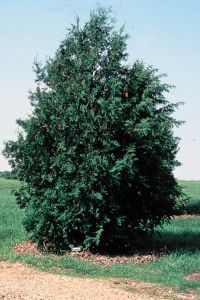
Long before Dr. Picotte entered medical school, Indigenous knowledge had helped sustain European newcomers to North America. During the winter of 1535–1536, scurvy devastated an expedition led by Jacques Cartier, a French navigator charting the St. Lawrence River, near present-day Québec, Canada. Domagaya, an Indigenous man from the St. Lawrence Iroquoian community of Stadacona, arranged for two women to prepare a drink from the bark and twigs of an evergreen called annedda, often identified as eastern white cedar (pictured right). Cartier credited the remedy with his sailors’ recovery. The preparation likely supplied vitamin C missing from their diet, alleviating the symptoms of scurvy centuries before scientists explained its cause. The women who prepared the medicine, unnamed in Cartier’s account, deserve a place in history alongside the explorer who recorded it.
Three centuries later, Gideon Lincecum, a self-taught physician and naturalist in Mississippi, turned to Choctaw healers when the treatments he knew failed his patients. After a devastating cholera outbreak around 1833, he became disillusioned with practices such as bloodletting and sought instruction from a Choctaw physician known in historical accounts as Alikchi Chitto, or “Great Doctor.” Over approximately six weeks, Lincecum learned how his teacher used medicinal plants to treat illness. He subsequently adopted botanical remedies in his practice and shared that knowledge with patients and other physicians. His experience reveals a source of medical education easily overlooked in histories centered on schools and textbooks: Indigenous practitioners’ expertise in local plants and illnesses.
Yet the knowledge changed as Lincecum recorded and interpreted it. He embraced plant remedies while marginalizing the spiritual explanations that accompanied his teachers’ understanding of healing. His writings therefore preserved a selective account of Choctaw medicine, filtered through his own beliefs about what counted as useful knowledge. For osteopathic educators, these accounts invite reflection on what may be lost when treatments are separated from the cultural and spiritual understandings surrounding them.
Later in the nineteenth century, the Omaha girl who had witnessed a woman’s unanswered need for care returned home as a physician. Susan La Flesche Picotte served more than 1,300 people across approximately 450 square miles, helping with financial difficulties and family disputes as well as illness. In 1913, she opened a hospital in Walthill, Nebraska, that offered inpatient medical care, maternity services and surgery to both Native American and white patients. The hospital brought essential services closer to patients who previously had to travel to Omaha or Sioux City for surgical care.
For those of us teaching medicine in Fort Smith, Arkansas, Native American health history is part of the landscape around us. Beginning in 1831, the fort’s old log buildings stored supplies for Choctaw people being forcibly removed from Mississippi. One removal party reached Fort Smith on February 20, 1832, after low water on the Arkansas River had stranded its members downstream for a month in severe winter weather.
Across the Arkansas border, Choctaw communities rebuilt their institutions in what is now Oklahoma. The medical knowledge shared with Lincecum forms part of that history, as do later efforts to prevent disease and expand access to treatment. In 1911, the Choctaw Nation General Council called for a sanatorium for Choctaw and Chickasaw people with tuberculosis. An initial hospital followed near Talihina, Oklahoma, in the early twentieth century; a larger replacement opened in 1938.
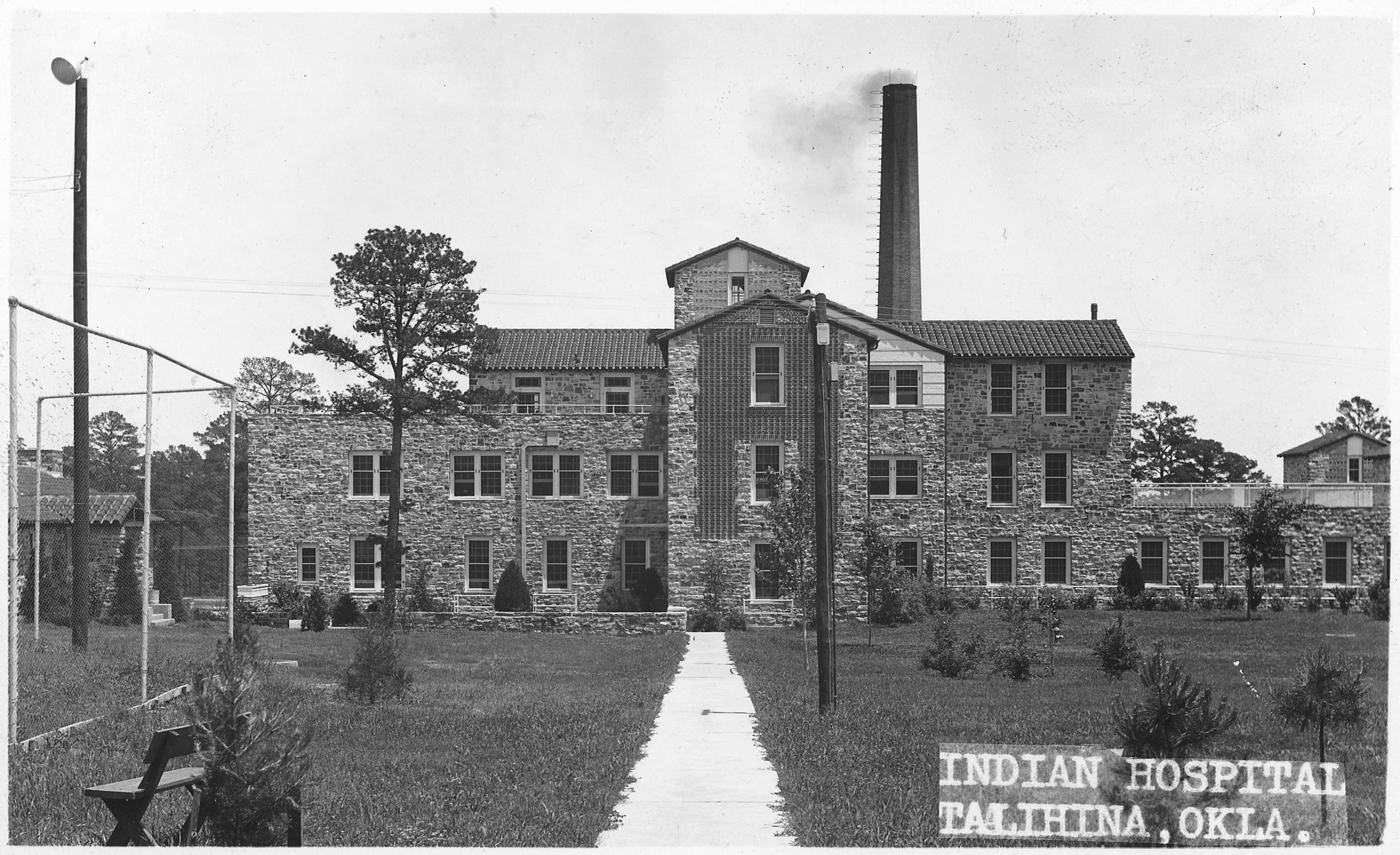
Photo: Talihina Indian Hospital, Oklahoma, circa 1941. This photograph shows the later hospital complex rather than the original 1917 building.
During Native American Heritage Month, these stories deserve a place in our medical classrooms. They help future physicians recognize the expertise of the communities they serve and understand how access to care has been shaped by displacement, exclusion and local leadership. Dr. Picotte’s story began with a woman waiting for a doctor who never came. Her return home and the hospital she helped establish offers a lasting example of what physicians can do when they make their community’s needs their own responsibility.
Photo Credits
Susan La Flesche Picotte: Photograph by Harry A. Webb. National Anthropological Archives, Smithsonian Institution, Photo Lot 24, SPC Plains Omaha BAE 4558 Family Photos, 00691200. Image record and reuse information.

Eastern White Cedar (Thuja occidentalis): USDA-NRCS PLANTS Database / D. E. Herman et al., North Dakota Tree Handbook, 1996. Public domain; via Wikimedia Commons. Wikimedia Commons image record and reuse information.

Talihina Indian Hospital: National Archives and Records Administration, Records of the Bureau of Indian Affairs, Record Group 75, National Archives Identifier 285387. Image record and reuse information.
